Let’s talk about how we can build your commerce project — tailored to your business, powered by Rigby
If you’re planning to launch or grow your services marketplace in 2026, you need features that support customers booking services, service providers managing their work, and platform owners running daily operations at the same time.
This checklist is for entrepreneurs, product managers, and platform owners planning to launch or scale a services marketplace in 2026. Choosing the right features is critical for building trust, driving growth, and ensuring operational success in a competitive digital services market.
It covers 21 core features used across successful service marketplaces. The list works as a reference when defining a minimum viable product, reviewing an existing service marketplace platform, or planning long-term platform development.
To keep the structure clear, the features are grouped into 10 areas:
- Provider Onboarding – how service providers join the platform and set up their profiles.
- Trust and Vetting – how identity, credentials, and trust signals are handled.
- Discovery and Matching – how customers find services and get matched with providers.
- Quoting and Engagement – how communication, offers, and agreements happen.
- Delivery Collaboration – how services are delivered, tracked, and approved.
- Payments and Escrow – how payment transactions and payouts are managed.
- Compliance and Legal – how tax, contracts, and platform policies are handled.
- Reputation and Review System – how feedback and provider reputation work.
- Dispute Resolution – how conflicts between customers and providers are resolved.
- Platform Analytics and Insights – how platform owners monitor and improve operations.
You will walk through each feature, see why it exists, and explore common implementation patterns used across real online service marketplaces.
If you want to compare feature requirements across other marketplace models, see our articles about B2C and B2B marketplace features.
Key insights
- Effective onboarding can increase user retention by around 50%.
- 67% of users want platforms to verify worker identities to help reduce these risks.
- 43% of power users valued having many providers to choose from.
- 82% of customers expect a response to an inquiry within 10 minutes.
- Poor communication and bad project data are responsible for 52% of all rework in projects.
What is a service marketplace?
A service marketplace is an online marketplace that connects service providers with customers who want to book services. The platform lists service categories such as home repairs, home services, office cleaning, food delivery, professional services, or digital services.
Service providers publish profiles and service listings. Customers search, compare options, and start a booking or request.
From the platform owner’s perspective, a services marketplace is a system to manage supply, demand, and transactions at scale. The owner defines marketplace rules, pricing logic, and revenue models, such as commissions, subscription fees, or paid listings. They decide which service providers can join, how user verification works, how payments flow, and how disputes are handled.
How does the service marketplace business model work?
From the platform owner’s perspective, a service marketplace business model is about structuring how demand, supply, and money move through one system – and how the platform captures revenue while controlling risk and operations.
Common revenue models for a service marketplace platform include:
Commission per transaction
The platform charges a percentage or fixed fee for each completed service booking. Payments flow through the marketplace, and the platform deducts its share before paying out service providers.
This model scales with transaction volume and works well for marketplaces with standardized services, clear pricing, and frequent bookings, such as home services or food delivery.
Subscription fees for service providers
Service providers pay a recurring fee to access the marketplace.
This model creates predictable revenue for the platform owner and is often used in professional services marketplaces or B2B-focused platforms with recurring provider activity.
Lead-based pricing
The platform charges service providers for access to customer requests or contact details. Providers pay per lead, per response, or through bundled lead packages.
This approach is common in marketplaces for local services, where customers request quotes and multiple providers compete for the job. Revenue depends on lead quality and demand volume.
Paid visibility and featured listings
Service providers pay for promoted placement inside service categories, search results, or recommendation sections. Featured listings increase exposure without changing core booking logic.
This revenue model is usually layered on top of commissions or subscriptions and works best in competitive service categories with many providers.
Add-on fees and optional services
The platform charges for optional extras such as advanced verification, insurance coverage, priority support, or extended analytics.
These fees target active service professionals who want additional tools or operational support without changing the base pricing model.
Beyond monetization, the business model covers operating costs and constraints. The platform owner carries responsibility for trust and safety, dispute handling, payment processing, customer support, and compliance with tax and data regulations. These factors directly influence margins and pricing strategy.
Owners who align pricing, workflows, and operational controls early avoid friction as provider numbers, service volume, and transaction value grow.
Types of service marketplaces
Service marketplaces can be grouped by how participants interact and who creates demand. Each model leads to different requirements around pricing, booking flows, service quality controls, and platform operations.
C2C service marketplaces
In C2C service marketplaces, individuals offer services directly to other individuals. The platform connects local professionals or skilled freelancers with customers looking for personal or one-off services.
Common industries and service categories include home services, home repairs, cleaning, moving, tutoring, personal training, beauty services, and short-term assistance. Many marketplaces for local services follow this model.
Typical platform characteristics include profile-based listings, availability management, messaging, reviews, and online payments. Trust and user verification matter more here because services often involve in-person delivery.
C2B service marketplaces
C2B service marketplaces reverse the usual flow. Individuals offer services or skills to businesses that need flexible access to talent or specific expertise.
Examples include freelance marketplaces for design, development, content creation, marketing, data work, or consulting. Businesses post projects or requests, and service professionals respond with proposals or availability.
These platforms often focus on project-based work, time tracking, milestone payments, and contract management. Payment flows, dispute handling, and compliance requirements tend to be more complex than in consumer-focused models.
B2C online services marketplace
In a B2C services marketplace, businesses or service companies sell services directly to consumers through the platform. The platform aggregates service providers under a single brand experience.
Industries commonly include food delivery, mobility, home maintenance, healthcare services, wellness, repairs, cleaning, and installation services. Pricing and booking are often standardized, and services may be delivered on-demand or scheduled.
This model usually involves tighter control over service quality, pricing rules, and delivery processes. The platform owner often plays a more active role in provider onboarding, verification, and performance monitoring.
B2B service marketplace
B2B service marketplaces connect businesses with other businesses offering specialized or recurring services. The focus is on professional services, operational support, or field services rather than one-off consumer bookings.
Industries include accounting, legal services, IT support, office cleaning, facility management, logistics, engineering, and compliance-related services. Contracts tend to be larger, longer-term, and more structured.
These platforms often require features such as role-based access, contract handling, invoicing, tax support, and reporting. Platform owners usually manage stricter onboarding, service standards, and compliance workflows to meet business expectations.
Examples of successful services marketplaces
Uber

Uber operates primarily as a B2C online services marketplace website. Customers book rides through a single app experience, while service providers (drivers) deliver the service under platform-defined rules around pricing, dispatch, and payments.
The model relies on real-time matching, location tracking, in-app messaging, secure payments, and a reputation system that shapes service quality. The platform owner runs pricing logic, fraud controls, dispute handling, and provider lifecycle management at scale.
Field Nation
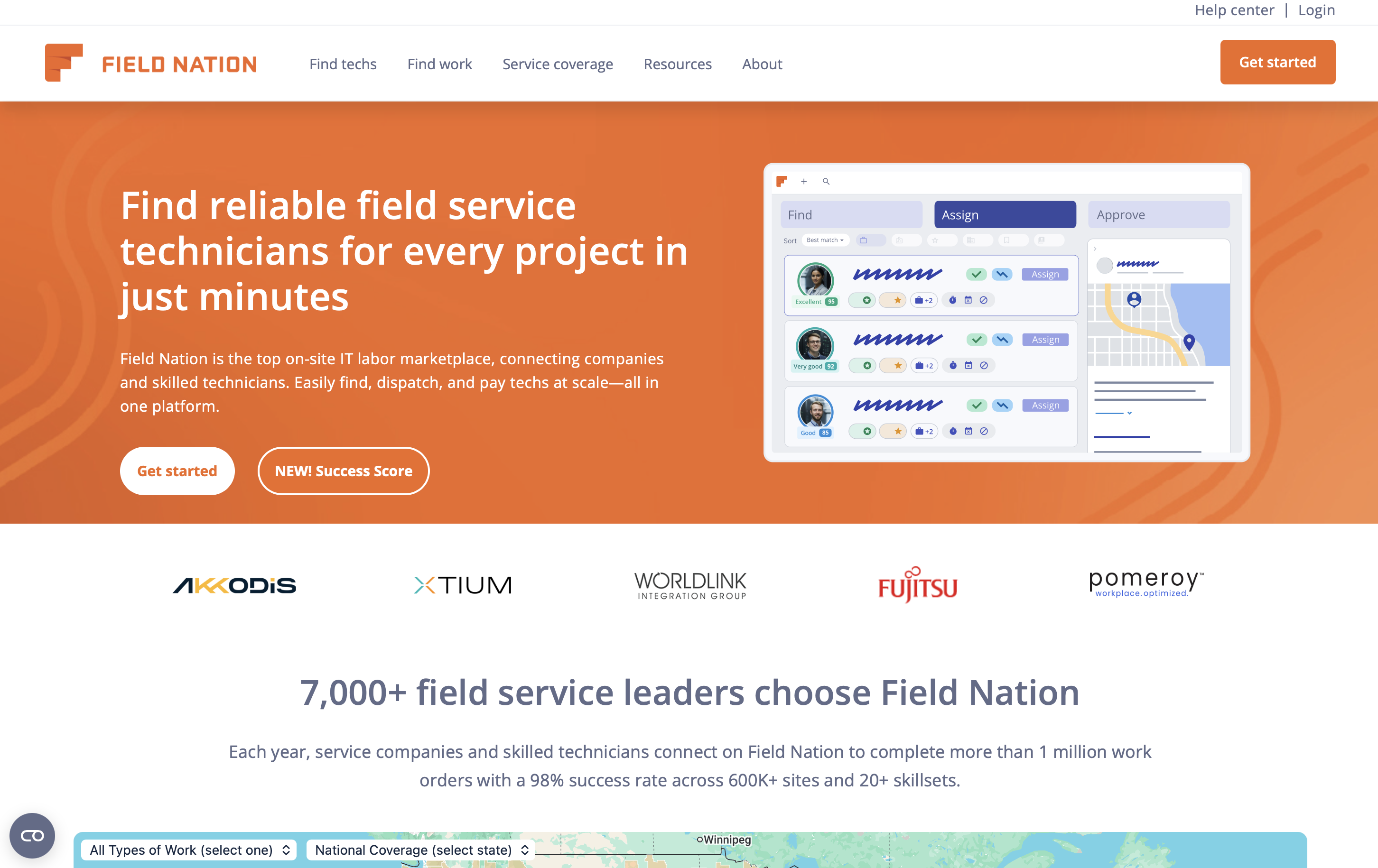
Field Nation operates as a B2B service marketplace connecting businesses with independent field service professionals. Companies post work orders for IT, networking, and on-site technical services, while service providers accept jobs based on location, skills, and availability.
The platform supports work order management, scheduling, time tracking, payment transactions, compliance documentation, and dispute handling. Platform owners focus on contract enforcement, service quality controls, and operational reporting across large enterprise clients.
Airbnb
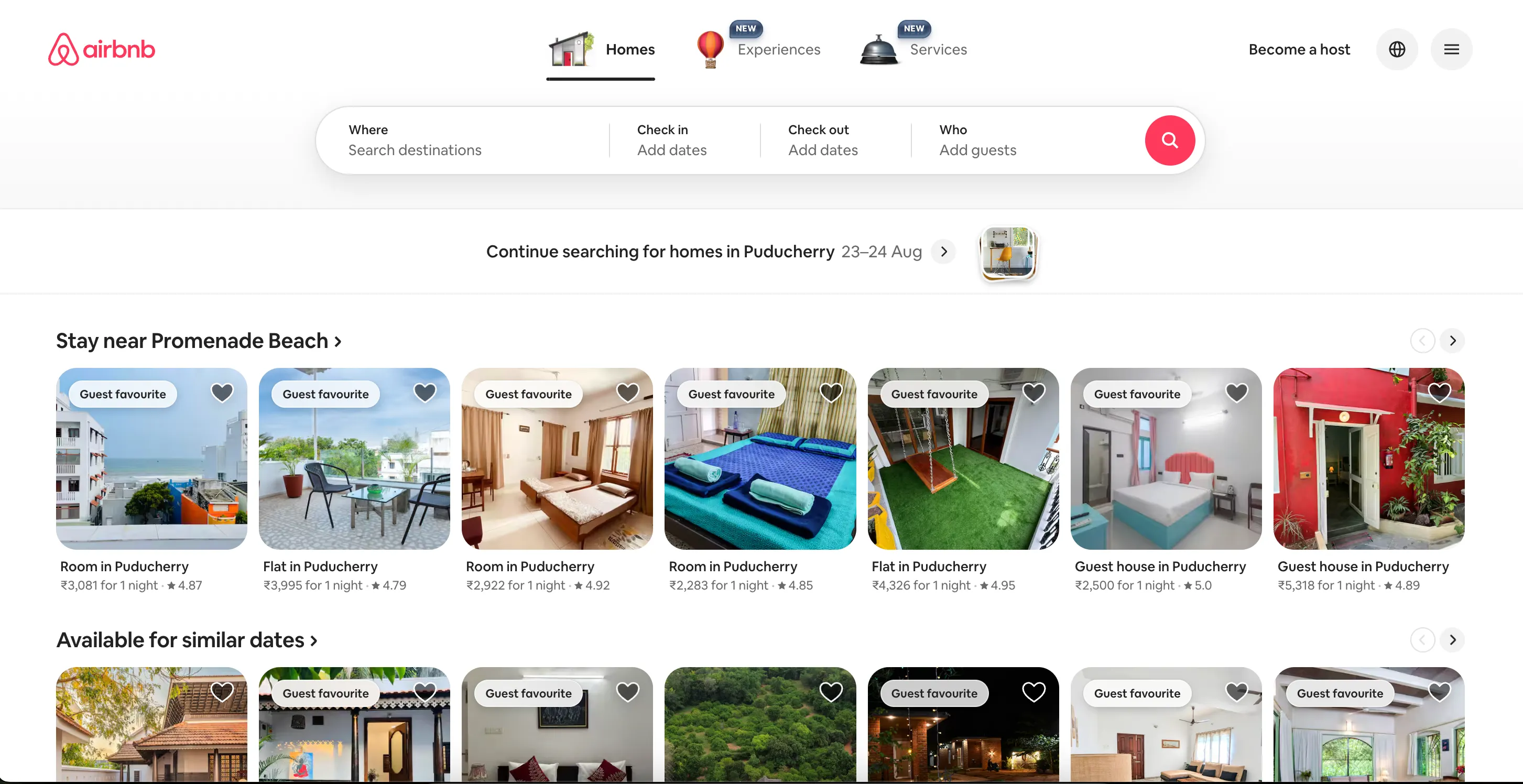
Airbnb is primarily a C2C service marketplace. Individual hosts offer stays to individual guests, with booking, messaging, and payment transactions handled through the platform.
The platform’s scale depends on identity checks, fraud prevention, cancellation rules, dispute workflows, and a strong reputation system. The platform owner uses policy enforcement and risk controls to manage high-stakes transactions across a global audience.
Services marketplace challenges and requirements
Running a service platform exposes a different set of problems than selling products online. Services depend on people, time, and context, which creates friction in areas such as quality control, availability, payments, and dispute handling.
When you own service marketplace, you need to expect these issues early and design the platform around them. Each challenge below reflects a pattern seen across online service marketplaces as they grow. The way you address these problems shapes platform stability, operating cost, and customer retention.
Low-quality or unreliable service providers
In a services marketplace, you will attract providers with mixed skill levels, uneven availability, and weak communication. These issues usually show up as canceled bookings, customer complaints, and poor reviews, which directly affect repeat usage.
To control this, you need more than an open signup form. Provider onboarding should change based on service category and risk level. Identity checks, credential collection, and minimum profile standards help filter out low-quality supply before it reaches customers.
You also need operational controls after onboarding. That includes the ability to pause providers from quoting or booking, delay payouts, and review accounts when patterns appear. Admin tools that track cancellations, disputes, response time, and customer feedback give you the leverage to manage supply quality as the marketplace grows.
Customers struggle to find the right service
As your service categories grow, customers face long result lists with little context. When users cannot quickly compare providers or understand differences, they delay decisions or leave the platform.
You need discovery built around how services are chosen, not how products are browsed. Search and filters should reflect location, availability, pricing model, ratings, and service-specific attributes. Ranking needs to surface reliable providers first.
On the platform side, this requires structured service metadata, availability-aware sorting, adjustable ranking rules, and result layouts that show trust signals and key details without forcing users to open every profile.
Off-platform communication and payment leakage
When customers and service providers move conversations or payments outside the platform, you lose revenue, visibility, and control. Disputes become harder to resolve, and platform rules stop applying.
You need to keep communication, agreements, and payments on-platform with flows that match how the service is sold, whether that is instant booking, quoting, or milestone-based work.
That requires in-app messaging with notifications, structured quote or booking flows, secure online payments, payout logic, and safeguards that limit sharing of external contact or payment details without blocking legitimate coordination.
Disputes about scope, quality, and payment
Service delivery often involves subjective judgment. Customers and providers disagree on what was included, when work was completed, or whether payment should be released.
You need a clear structure that turns discussions into recorded agreements and tracks delivery steps. When disputes appear, resolution should rely on platform data rather than private conversations.
This means proposals that convert into formal jobs, stored messages and file history, delivery status and approval steps, escrow or payout holds, and admin tools for reviewing evidence, issuing refunds, or releasing partial payments.
Service quality variance at scale
As more providers join, quality spreads out across locations and service categories. A small number of poor performers can damage trust across the whole marketplace.
You need ways to measure performance and adjust visibility based on behavior. Strong providers should receive more exposure, while weak providers face limits or corrective action.
That requires ratings and reviews tied to completed transactions, tracking of completion and cancellation rates, performance tiers or badges, moderation workflows, and controls that affect ranking, lead access, or booking eligibility.
Limited operational visibility for the platform owner
Without clear data, you cannot see where bookings fail, which services generate stable revenue, or which providers create risk. Decisions turn reactive instead of planned.
You need visibility across the full service lifecycle, from discovery to payout and dispute resolution.
That requires dashboards covering bookings, conversion, cancellations, payouts, disputes, and provider activity, along with filters by service category, location, and time period so you can act before problems grow.
21 key features of a services marketplace model
A services marketplaces operate well when the platforms support real operational needs on both sides. Customers expect fast discovery, clear pricing or quoting, and reliable delivery. Service providers expect stable rules, predictable payouts, and tools that match how they work.
As the marketplace owner, you need control, visibility, and room to adjust flows as the service marketplace grows.
The 21 items below are the essential features behind a successful marketplace in the service industry. They cover the full lifecycle of an online service marketplace from provider onboarding and trust, through discovery and engagement, to delivery, online payments, disputes, compliance, and analytics.
Use the checklist to plan an MVP for your business idea, review an existing service marketplace platform, or spot gaps before they turn into churn, support load, or revenue loss.
Provider Onboarding
This part focuses on how service providers join the marketplace and get activated: from first registration to their initial understanding of how the platform works. Effective provider onboarding reduces early drop-off and accelerates time-to-first-success, which is critical for marketplace liquidity.
1. Simple Registration & Profile Setup
The platform provides a streamlined sign-up process that allows service providers to quickly create an account and build a comprehensive profile. During registration, providers enter essential information such as their skills, credentials, portfolio, and service details.
The goal is to minimize friction during sign-up while still ensuring that providers supply the key information required to represent their services accurately. A smooth registration flow helps providers reach their first meaningful interaction on the platform more quickly, such as receiving a job or inquiry.
Why It Matters
Onboarding is the first hurdle in acquiring supply for a marketplace. A lengthy or complicated registration process can cause providers to abandon the platform before completing sign-up or engaging in any transactions.
In service marketplaces, the time between sign-up and first success is often longer than in typical applications. A well-structured onboarding experience helps providers see value earlier, which is essential for retention. Research indicates that effective onboarding can increase user retention by around 50% by helping users reach their “aha” moment faster.
Efficient registration leads to more activated providers, directly increasing marketplace liquidity and the likelihood of successful matches between supply and demand.
Best Practices
- Minimize Friction: Allow sign-up via email, phone, or social logins, and defer non-essential steps. Each additional form field increases drop-off risk. For B2B platforms, requiring business emails can help maintain lead quality while keeping the process fast.
- Progressive Profiling: Let providers initially enter only basic information and start exploring the platform, then prompt them to complete additional profile sections over time. Showing a completion percentage or checklist can significantly increase profile completion rates.
- Guided Setup: Provide tooltips, examples, or templates for profile fields, such as guidance on writing a service description or setting prices. Auto-filling known information where possible can substantially increase submission rates.
- Mobile-Friendly Design: Ensure the entire onboarding flow works smoothly on mobile devices, including identity verification and photo uploads. Many service providers join via mobile, and optimized mobile onboarding can double completion rates.
2. Onboarding Guidance & Training
The platform offers educational content and personalized guidance during onboarding to help providers understand how to use the marketplace effectively. This may include in-app tutorials, FAQs, interactive walkthroughs, or one-on-one onboarding support.
The guidance covers core platform actions such as bidding on jobs, communicating with clients, improving profiles, completing verification steps, and setting up payment details. The aim is to reduce confusion and help providers feel confident using the system from the start.
Why It Matters
Service marketplaces often have a learning curve, particularly when providers must complete multiple steps such as identity verification, service listing, and payment setup. Without clear guidance, new providers may feel overwhelmed and churn before engaging with clients.
Personalized onboarding significantly improves activation. According to the document, tailoring onboarding to the provider’s role or category can increase user retention by approximately 40% compared to generic flows.
By educating providers early, for example, by showing them how to secure their first gig, the marketplace builds trust and confidence while establishing quality standards from day one.
Best Practices
- Role-Based Tracks: Tailor onboarding content to the provider’s service type or persona. Different roles require different guidance, and over half of users expect onboarding to be relevant to their specific context.
- Interactive Tutorials: Use onboarding checklists and step-by-step in-app tutorials to guide providers through key actions such as creating a service listing or submitting a sample quote. Such interactive guidance significantly improves task completion.
- Mentorship and Support: Offer one-on-one onboarding sessions or mentorship programs for new providers, focusing on actionable advice that helps them secure their first customer. Generic or rushed orientations should be avoided.
- Early Success Nudges: Actively guide new providers toward their first successful interaction, such as responding to open requests or enabling newcomer promotions. Faster time-to-first-win strongly correlates with long-term activity and retention.
Trust & Vetting
This part focuses on building and maintaining trust within the marketplace by verifying provider identities, credentials, and reliability. Strong trust and vetting mechanisms reduce fraud, increase user confidence, and enable safe transactions between parties who often have no prior relationship.
3. Identity Verification
The platform includes processes to verify that service providers are who they claim to be. This can involve uploading identity documents, verifying email addresses and phone numbers, confirming bank accounts, or using biometric verification methods such as selfies or live video checks.
Once completed, verified providers may be visibly marked on their profiles with an “ID Verified” status. Identity verification establishes a baseline level of trust and accountability across the marketplace.
Why It Matters
Trust is the currency of a services marketplace – if customers can’t trust the provider entering their home or handling a project, they won’t engage.
Verifying identity upfront dramatically reduces fraudulent accounts and builds user confidence. According to a 2025 industry survey, about 40% of gig platform users worry about fraud or scams during transactions. The same research found 67% of users want platforms to verify worker identities to help reduce these risks.
Robust ID verification prevents banned or disreputable providers from simply re-registering under a new name. It also lays the foundation for accountability: when everyone is verified, users behave better, and if issues arise, the platform knows who is involved.
Ultimately, trust drives usage – users stick with marketplaces that make them feel safe, and they abandon those that don’t. More than half of users said they would stop using a platform entirely if they were scammed or felt their safety was compromised.
Best Practices
- Multi-Step Verification: Combine multiple verification methods, such as government-issued ID uploads with selfie or live video verification, to ensure the identity belongs to the registering user. Biometric verification can increase completion rates by making the process smoother (one study noted it sped up verification and improved completion by 25%).
- Background Database Checks: Where relevant, cross-check identities against watchlists or official databases. While this adds friction, users generally accept it when it is clearly communicated as a safety measure.
- Visible Trust Badges: Clearly display verification status on provider profiles. Visual trust signals help customers quickly assess safety and often influence hiring decisions.
- Periodic Re-verification: Re-run identity checks periodically or when suspicious activity is detected. Ensure sensitive data is stored securely and deleted once verification is complete to protect user privacy.
4. Background & Credential Checks
Beyond identity verification, the platform may perform deeper vetting of providers’ backgrounds and qualifications. This can include criminal background checks, driving record checks for mobility services, or verification of professional licenses, certifications, and educational credentials.
This process ensures that providers not only are real individuals but also possess the qualifications and trustworthiness required to deliver the advertised services.
Why It Matters
In service marketplaces, users aren’t just buying a product – they’re often inviting someone into their office, home, or critical business process. Ensuring that providers have a clean record and the claimed qualifications (e.g. a certified electrician, a licensed nurse, or a skilled developer) is essential for trust and safety.
Rigorous vetting is a hallmark of high-quality platforms; for instance, some freelance platforms claim to accept only the top few percent of applicants after skills tests and background screening. Customers are willing to pay a premium for vetted professionals because it reduces their risk.
In fact, 58% of gig platform users say they want background checks on workers as a fraud and safety prevention measure. Additionally, certain industries or enterprise clients may require contractors to be background-checked (e.g., a corporate client hiring a freelancer might mandate no felony record).
Failing to vet can lead to incidents that destroy the marketplace's reputation. On the flip side, strong vetting policies and clearances can become a selling point (e.g., “All our caregivers pass a 7-year background check”). It builds confidence that the marketplace stands behind the people it connects.
Best Practices
- Service-Specific Screening: Apply different levels of vetting depending on the service category. For example, driving and criminal checks for drivers, but portfolio and work-history verification for digital freelancers.
- Third-Party Screening Services: Use specialized background check providers to ensure fast, compliant, and accurate verification across jurisdictions. Always obtain user consent and comply with local regulations (e.g. Fair Credit Reporting Act in the US, GDPR in Europe).
- Credential Verification: Where relevant, verify licenses or qualifications (e.g. check a plumber’s license number against a government database, or verify a university degree). Providers can be prompted to upload proof of certifications, which the platform can then verify and badge (like “Certified Teacher” or “AWS Certified Developer”). This assures customers that claimed skills are legitimate.
- Ongoing Monitoring: Treat vetting as an ongoing process. Monitor changes in provider status, re-run checks when necessary, and suspend providers pending review if serious issues arise.
5. Trust Signals & Guarantees
The platform provides visible trust signals and protective mechanisms that reassure users throughout the transaction lifecycle. These include verified reviews, trust badges, insurance or guarantee programs, and clearly defined safety policies.
Trust signals communicate reliability at a glance, while guarantees protect users if something goes wrong during a service engagement.
Why It Matters
Beyond vetting providers, marketplaces must continuously cultivate trust between all parties. Trust signals help overcome the inherent uncertainty of transacting with an unknown person.
For example, a platform guarantee (insurance) that covers damage or poor service can reassure customers to take a chance on a provider. Trust signals also include transparent ratings and review systems (covered in detail in the Reputation section), which hold providers accountable.
High perceived trust directly correlates with marketplace growth: studies have shown that when a platform effectively addresses trust and safety, usage increases as customers stick around and providers feel accountable.
Conversely, trust breaches can be catastrophic: a single well-publicized incident can drive away a chunk of users and invite regulatory scrutiny.
By proactively offering protections and highlighting quality (e.g. “background-checked” badges, satisfaction guarantees), marketplaces can differentiate themselves. In a survey, 83% of gig platform users said they were satisfied with current trust and safety features, but noted that any serious safety incident would quickly erode their loyalty.
Best Practices
- Guarantee or Insurance: Provide a form of protection for transactions, such as a money-back guarantee, damage insurance, or satisfaction policy. For instance, a home services marketplace might insure jobs up to a certain amount against property damage. Make the claims process straightforward so users believe in the coverage.
- Visible Trust Marks: If the platform has undergone any third-party audits or certifications (e.g. an “OECD Trustworthy Marketplace” badge or compliance with a code of conduct), display these. Trust seals can inspire confidence, much like e-commerce sites display security badges. Even an internally created “Top Provider” designation (for providers with consistently high ratings and no disputes) can act as a trust mark.
- User Safety Education: Clearly communicate to users what the platform is doing about safety (background checks, ID verification, etc.) and also provide guidelines for users to protect themselves. In-app safety tips – for example, “Always communicate through the platform for your security” or “For in-person meetings, our app can share your trip status with an emergency contact” – empower users and demonstrate the platform’s commitment.
- Responsive Trust & Safety Team: Have a dedicated team or process to handle trust issues (fraudulent listings, harassing behavior, etc.) swiftly. Users need to see that if something or someone violates trust, the platform takes immediate action (suspending accounts, offering refunds, etc.). Swift, visible responses help maintain the community’s confidence that bad actors are dealt with, preserving overall trust in the marketplace.
Discovery and Matching
This part focuses on how customers find the right providers and how the platform helps turn browsing into confirmed engagements. Strong discovery and matching directly improve conversion, fill rate, and overall marketplace liquidity.
6. Advanced Search & Filtering
The platform includes a robust search experience that allows customers to find service providers based on relevant criteria and narrow results using filters. In a services marketplace, search commonly supports filtering by service type, location, price range, rating, availability date, language, skill, and other attributes.
Advanced implementations typically include keyword search, sorting options (for example, by highest rating or fastest response), and sometimes map-based search for local services. The goal is to make it easy for customers to move from a broad need to a short list of credible options.
Why It Matters
Effective discovery is the linchpin of a two-sided marketplace – it directly impacts whether a transaction happens. If buyers cannot easily find a provider that meets their needs, they’ll abandon the platform (or go to a competitor).
Conversely, a great search experience increases conversion and marketplace liquidity (the rate at which listings/jobs get filled). Ease of discovery is often cited by users as a top reason for choosing one platform over another.
In fact, households that heavily use gig services rank “ease of finding the service they need” as a major driver for using marketplaces (51% of such users cited this, versus 40% of other users). Additionally, a wide selection of providers matters – 43% of power users valued having many providers to choose from.
These statistics underscore that users flock to platforms where they can quickly find the right match. A strong search function also improves trust: when results are relevant, users feel the platform “understands” their needs.
Gartner and other analysts note that personalization in search results can significantly boost engagement. Ultimately, better discovery = more matches = more revenue for the marketplace.
Best Practices
- Rich Filters and Sorts: Enable users to filter by key attributes (location, price, rating, specialty, etc.). For example, a client should be able to filter for a plumber within 10 miles who is available this weekend and has an average rating of 4+ stars. The ability to narrow choices makes large marketplaces usable. Also include sorting options (e.g., by price, rating, number of completed jobs).
- Autocomplete and Suggestions: Use an intelligent search bar that autocompletes service categories or skills as the user types (“Did you mean: web designer?”) to guide users and reduce typos. Also, suggest related searches or popular services to encourage exploration.
- Category Browsing: For users who aren’t sure what they need, provide a clear category hierarchy or guided navigation. For example, list high-level categories (Design, Home Repair, Delivery, Legal, etc.) and sub-categories beneath them. This is especially important for B2B service marketplaces where buyers might browse by category of expertise needed.
- Result Quality Signals: In search results, show trust indicators and key info at a glance – e.g., provider photo, star rating, number of completed jobs, starting price, and a “verified” badge if applicable. Highlighting these in the results list itself helps customers quickly evaluate options. As one best practice, marketplaces often surface top-rated or premium providers prominently (sometimes as sponsored or featured listings), which both monetizes the platform and improves the customer’s chance of a successful match.
7. Intelligent Matching & Recommendations
The platform uses algorithm-driven matching to connect customers with relevant providers (and providers with relevant jobs). This includes recommendation engines that suggest providers for a posted request, suggest jobs to providers, and rank search results based on relevance and quality.
More advanced matching uses AI and machine learning signals such as past behavior, successful job outcomes, skills, geography, and real-time availability to optimize ranking and recommendations. The goal is to reduce effort for users and increase the probability of a successful engagement.
Why It Matters
Manual search is not always enough – especially at scale. An intelligent matching system accelerates the “find the right partner” process by bringing the most suitable options to the forefront.
For example, when a client posts a job request, the platform might automatically recommend a short list of available providers with the required skills and high ratings. This reduces time-to-fill and increases the likelihood of a successful project.
McKinsey has noted that data-driven matching can dramatically improve marketplace efficiency by increasing fill rates and user satisfaction. Also, faster matching has a direct business impact: one study found that 78% of customers end up buying from the first responder to an inquiry.
In a marketplace context, that implies that if your matching algorithm quickly notifies the right provider who responds first, you’re far more likely to win the transaction. Furthermore, good matching fosters stickiness. Users feel the platform adds value (doing the heavy lifting of sifting through options), rather than just being a listing directory.
Over time, as data accumulates, algorithmic matching often gets better – which can become a competitive moat.
Best Practices
- Relevance Ranking: Go beyond simple keyword matching. Incorporate provider performance (ratings, completion rate), similarity to past successful matches, and contextual factors into your ranking of search results or suggestions. For instance, if a client frequently hires graphic designers for infographics, the algorithm can learn to rank providers with infographic experience higher for that client.
- Automated Job Recommendations: When a new job is posted, automatically notify a subset of best-fit providers rather than waiting for them to search. This could be via push notification or email (“New job you might be interested in…”). Best-fit could consider skills match, location, price range, and an analysis of which providers tend to respond quickly or get hired for similar jobs. Fast engagement is key – providers on one leading platform respond within 12 minutes on average to posted work due to such instant matching and notifications.
- Personalized Suggestions: For the customer side, provide personalized recommendations. For example, after a client completes a project, suggest other providers they might need (“You hired a web developer – do you need an SEO specialist? Here are some top-rated ones.”). This cross-service recommendation leverages usage data to increase repeat engagement.
- Feedback Loop and Tuning: Continuously gather data on whether matches are successful (was a recommended provider hired? Did the project go well?). Use this data to train machine learning models or refine rules. Also, allow users to give feedback on recommendations (“These suggestions weren’t relevant” or allow them to explicitly state preferences) – this can help adjust the matching criteria to be more accurate.
Quoting and Engagement
This part covers how customers and providers communicate, clarify requirements, and turn interest into a confirmed agreement. Strong engagement tools reduce friction in pre-contract conversations and help close deals faster while keeping interactions on-platform.
8. In-App Messaging & Communication
The platform provides real-time, on-platform communication tools that allow customers and providers to exchange messages securely. This typically includes text chat, notifications for new messages, and support for attachments such as documents or images related to the service.
In some cases, communication tools also support voice or video call scheduling, while masking personal contact details to protect privacy and prevent off-platform transactions. All communication is centralized within the marketplace environment.
Why It Matters
Strong communication is the bedrock of successful service engagements. Before any contract is agreed upon, buyers and sellers usually need to clarify requirements, timelines, or custom requests. Having an easy, reliable way to communicate within the platform keeps users engaged and helps prevent misunderstandings.
This directly affects conversion: if a client reaches out with a question, a quick reply can make the difference between booking or bouncing to a competitor. In fact, 82% of customers expect a response to an inquiry within 10 minutes – a figure that underscores the modern on-demand mindset. Marketplaces that facilitate fast responses have a higher chance of winning the business.
Moreover, keeping communications on-platform provides a record in case of disputes and helps the platform monitor for quality and safety (e.g., filtering abusive language or detecting if someone tries to exchange contact info to go off-platform).
From a trust perspective, in-app messaging also gives customers peace of mind – they aren’t texting some random number, but using an official channel that may offer support if anything goes wrong.
Overall, robust engagement tools ensure that the negotiation and requirements-gathering phase is smooth, which in turn leads to better outcomes and fewer disputes (many project failures stem from miscommunication early on).
Best Practices
- Instant Notifications: Use push and email notifications to alert users immediately when they receive a message. Consider indicators such as last active status or automated away messages to manage expectations.
- Rich Communication Features: Support attachments and structured message types. Where appropriate, enable scheduling of voice or video calls within the platform while keeping personal contact details hidden.
- Guided Communication Templates: Provide optional prompts or templates that help users cover key topics such as requirements, budget, timelines, or deliverables, reducing misunderstandings early on.
- Communication Safety Rules: Enforce platform rules by detecting attempts to share external contact or payment details and reminding users to stay on-platform. This protects users and helps prevent fraud and disintermediation.
9. Quote and Proposal Management
The platform allows providers to create and send structured quotes or proposals to customers, and enables customers to review, negotiate, and accept those offers within the system. A quote typically formalizes scope, pricing, timelines, and deliverables discussed during earlier conversations.
Once accepted, a proposal converts into a confirmed job or contract in the marketplace, creating a clear, shared reference point for both parties.
Why It Matters
The quoting stage is where tentative interest turns into a committed transaction. A clear and efficient proposal process reduces friction in closing the deal.
If too much of this is handled informally (or offline), details can slip through the cracks, leading to disputes later (“I thought you agreed to also include X”). A structured proposal feature ensures both parties are literally “on the same page” regarding deliverables, timelines, and price. It also simplifies negotiations – clients can counteroffer within the platform, etc., which keeps momentum.
Market data shows that speed matters immensely here: being able to quickly generate a professional quote can win jobs. Companies that respond to RFPs or leads faster have a higher win rate; one related statistic in sales is that the first company to provide a quote is far more likely to win the business (many buyers go with the first satisfactory quote they get).
This aligns with the earlier point that the vendor who responds first often captures the customer, 78% of the time in some studies. Therefore, providing easy quote tools helps providers be that fast responder.
Additionally, standardized quotes protect the platform’s interests – you can include standard terms and have an official record of the agreement. This becomes vital if there are cancellations or payment disputes later.
Best Practices
- User-Friendly Quote Builder: Allow providers to create quotes using simple forms with line items, descriptions, pricing models (fixed or hourly), and timelines. Where possible, pre-fill data from provider profiles or predefined services.
- Template Library: Offer reusable quote templates for common service types, especially in B2B or complex engagements. Common sections like scope of work, milestones, and terms can be pre-populated. This not only saves time but also yields more consistent, professional proposals. Some platforms integrate e-signature or agreement click-through at this stage so that the quote, once accepted, is a binding contract.
- Transparent and Binding Offers: Make it clear when an offer is firm. For instance, if a provider sends an offer labeled “Final Quote – valid for 7 days,” and the client accepts, that should automatically form a job agreement with those terms. Including an expiry on quotes is a good practice (and letting providers withdraw or update quotes before acceptance) to account for changing schedules or costs.
- Negotiation Support: Enable a bit of back-and-forth on the quote. A client might request a change – it’s useful if they can comment or request an edit, and the provider can then amend and resend the quote. Each version should be saved for clarity. Once both parties are satisfied, a one-click acceptance should finalize it. Also, consider showing a comparison if multiple providers bid on a posted job: a client should be able to easily compare quotes (price, estimated delivery, provider credentials) side by side if it’s a competitive marketplace.
Delivery Collaboration
This part focuses on how services are delivered after an agreement is in place. Delivery collaboration tools help providers and customers stay aligned during execution, reduce miscommunication, and increase the likelihood of successful outcomes and positive reviews.
10. Project & Milestone Management
The platform provides tools for managing service delivery once a project is in progress. This includes defining milestones or phases, setting due dates, and tracking progress through a shared workspace visible to both customer and provider.
Depending on the service, this may range from a simple checklist or progress indicator for one-off tasks to multi-stage milestone planning for longer or more complex engagements. The shared workspace centralizes tasks, deliverables, and approvals.
Why It Matters
Unlike product marketplaces, service engagements often unfold over time and require coordination. Having a collaboration space keeps both parties aligned, which is crucial for client satisfaction and provider success.
Without it, communication might fragment (some emails here, some texts there, files scattered across platforms), increasing the chance of miscommunication. And miscommunication is costly – in project-based work, poor communication and bad project data are responsible for an estimated 52% of all rework (do-overs) in projects.That translates to wasted time and money for both sides.
A well-designed project workspace can mitigate these issues by making expectations and progress visible. It also fosters accountability: when milestones are clearly agreed upon and tracked, providers are more likely to deliver on time, and clients are more likely to provide timely inputs or approvals.
For the marketplace, facilitating smooth delivery increases the likelihood of positive outcomes (and good reviews), which feeds the platform’s reputation and repeat usage. Furthermore, structured project data (milestones, completion dates, etc.) gives the platform insight into delivery patterns and potential bottlenecks, informing future improvements (this ties into platform analytics).
Best Practices
- Shared Milestones: Let either the client or provider set up milestones/deliverables in the contract, and have both agree to them at the start. These milestones should appear in a timeline or list in the workspace. Providing a simple status indicator (e.g. Not Started, In Progress, Completed, Approved) next to each milestone gives clarity. Also consider automatic reminders or notifications as milestone due dates approach or if a milestone is marked complete.
- File Sharing & Versioning: Include the ability to upload and share files safely within the workspace. If the service involves deliverables (documents, images, code), keeping them in one place helps both parties. Support multiple versions or at least keep an archive of files exchanged (so earlier versions can be retrieved if needed). This ensures that even if there are revisions, the history is preserved – no “I thought you said to change X” confusion because you can refer back to earlier files or comments.
- Integrated Feedback and Approvals: Give the client a way to mark milestones or deliverables as accepted or request changes. For example, when a provider uploads a design draft, the client could click “Approve” or “Request Revisions” along with a comment. This structured loop prevents projects from stalling – both sides have clarity on what’s approved and what’s pending.
- Contextual Communication: The project workspace should integrate with messaging (or have a discussion thread per milestone/task). Keeping context is key: if the client has feedback on Milestone 2, writing it in a comment attached to Milestone 2 (instead of a random email) ensures the provider sees it in context. Some marketplaces even integrate with third-party tools (for example, allowing an Asana or Trello board integration) for power users who want advanced project management, but the built-in features should suffice for most.
11. Time Tracking & Work Verification
The platform includes mechanisms to track work and verify that services were delivered as agreed. This is especially important for hourly, ongoing, or location-based services.
Time tracking tools may allow providers to log hours through a start/stop timer, while verification features can include screenshots, activity indicators, GPS tracking, or before-and-after evidence, depending on the service type. These records create objective proof of work completed.
Why It Matters
Trust during delivery isn’t just about quality – it’s also about ensuring the agreed work is being done, especially when clients can’t physically oversee it.
For hourly contracts, time trackers build trust that billed hours are legitimate. Without this, clients may fear “hour padding” and providers might worry about payment denials (“I worked 5 hours, client claims it should have been 3”). The data from time tracking provides a source of truth.
Upwork, for example, popularized a time-tracker with screenshots for hourly jobs, which significantly reduced disputes over hours billed and gave clients confidence to hire remote freelancers. Additionally, verified logs can protect providers from scope creep – if the client sees the hours adding up, they might realize additional requests will cost more time.
Beyond hours, verifying that a task was completed as claimed is crucial in many services. Rideshare and delivery apps use GPS to automatically mark trips as completed and to justify charges (no more “driver didn’t actually drive that far” – the app shows the route and distance).
In-home services, an app might require the provider to take before/after photos as proof of work. These verification features reduce opportunistic disputes and fraud. They also provide data to improve operations (e.g., average time to complete Task X, which can inform future pricing or matching).
In sum, time and work tracking features uphold the integrity of the transaction and ease the path to payment, benefiting all parties.
Best Practices
- Simple and Accurate Time Logging: Make time tracking easy to use, with real-time visibility for both parties. Support offline logging and automatic syncing to avoid data loss.
- Appropriate Evidence Collection: Use screenshots, activity signals, or geo-verification only where appropriate, and handle privacy carefully. Transparency about what is tracked and why is essential.
- Location-Based Verification: For on-site services, use GPS or check-in/check-out mechanisms to confirm arrival and completion automatically, with user consent.
- Completion and Sign-Off: Allow providers to mark work as completed and prompt customers to review and approve before payment is released. A final summary of work performed helps close the loop cleanly.
Payments and Escrow
This part focuses on how money moves through the marketplace in a way that protects both sides. Strong payment infrastructure reduces transaction anxiety, prevents off-platform leakage, and creates a reliable path from agreement to payout.
12. Secure Escrow Payments
The platform supports an integrated escrow payment flow where client funds for a job are held by the platform and released to the provider only when work is completed (or when agreed milestones are approved). The platform acts as a neutral third party that secures funds during the engagement.
Escrow typically supports upfront deposits, milestone-based releases, and handling of refunds or cancellations based on marketplace rules. Funds are locked in a protected state so neither party can unilaterally control them during delivery.
Why It Matters
Payment anxiety is a top concern on both sides of a service transaction. Providers worry, “Will I actually get paid for my work?” and clients worry, “What if I pay and the work isn’t done right (or at all)?”
Escrow directly addresses this trust gap by protecting both parties: clients know their money won’t be released until they get the service as promised, and providers know the client has the money ready to pay. This is especially vital in marketplaces, because unlike hiring a known contractor or consulting firm, these are often first-time interactions between strangers. Without escrow, many might insist on cash on delivery or simply avoid remote transactions.
By holding the funds, the platform essentially vouches for the transaction’s fairness. Research shows that late or missing payments plague the freelance economy – half of freelancers have had trouble getting paid on time in a given year, and over a third have even completed work that was never paid at all. That’s an enormous pain point that a well-run escrow system can virtually eliminate on the platform.
Knowing this, freelancers are drawn to marketplaces that ensure payment (it’s a key selling point of using a marketplace versus finding gigs on your own). For clients, escrow offers a money-back guarantee in practice; they’re more willing to commit funds knowing they can dispute if something goes awry.
Overall, secure escrow builds trust in the marketplace and facilitates smoother, faster transactions – it’s no coincidence.
Best Practices
- Upfront Deposit: Require clients to fund the escrow account (at least a significant portion, if not 100%) when a project or milestone begins. This ensures commitment. Communicate clearly to both parties when funds are “in escrow” and therefore secured. For example, show a status like “Client payment received – held in escrow” on the project dashboard.
- Milestone Releases: For larger projects, support splitting the payment into milestones. As each milestone is completed and approved, that portion of funds is released to the provider, and then the client funds the next milestone. This staggered approach builds mutual trust through the project and gives providers continuous cash flow on long engagements.
- Dispute Mediation Flow: Have a procedure in place for when a client is not satisfied and a dispute is opened before releasing escrow. Typically, funds remain frozen until the dispute is resolved. The platform should mediate (or arbitrate) fairly – potentially splitting funds, issuing refunds, or paying out, based on evidence from both sides. Clear dispute resolution policies (see Dispute Resolution section) tied into escrow are crucial. Importantly, automate as much as possible: e.g., if the client doesn’t respond within X days of a submission, funds can auto-release to the provider (to prevent indefinite holding).
- Security and Compliance: Use reputable payment processors and store funds in a secure, insured manner (often a separate trust or escrow bank account). Ensure PCI compliance for handling any card data and follow regulations for money transmission. Many countries have laws governing the holding of client funds; partnering with a compliant escrow service or obtaining licenses is part of the feature’s backend implementation (though invisible to users, it’s vital). Providing multiple payment methods (credit card, bank transfer, e-wallet, etc.)
13. Flexible Payouts & Transparent Fees
The platform provides mechanisms for provider payouts and ensures fees are disclosed clearly to both sides. Flexible payouts give providers options for how and when they receive earnings, such as bank transfer, e-wallets, and potentially instant payout options.
Transparent fees mean clearly communicating marketplace commissions and any processing costs upfront. This area also commonly includes invoicing, receipts, and tax documentation support needed for financial record-keeping.
Why It Matters
Payments are the lifeblood of the provider side of the marketplace. A smooth payout experience keeps providers happy and loyal. If a marketplace makes it hard for providers to get their money (long delays, limited payout options, or unexpected fee deductions), they will be hesitant to continue using it – or worse, they might try to take transactions off-platform after the first connection.
On the client side, transparency in pricing and fees affects trust and conversion. Surprising a client with, say, a 20% platform fee at checkout can cause cart abandonment (or in this case, job abandonment). The way fees are structured also matters for marketplace economics: some platforms charge clients, some charge providers, some split fees. Whatever the model, it should be communicated clearly so users perceive it as fair.
Additionally, compliance in payouts (properly classifying payments, handling taxes) protects the platform and users. For example, under new laws, platforms may have to report provider earnings to tax authorities – doing this seamlessly and providing tax forms builds credibility with providers (and with regulators).
Finally, offering features like escrowed funds (as above) combined with flexible withdrawal (like the ability to cash out immediately for a small fee) can even become a competitive advantage to attract providers who value quick access to earnings.
In summary, if escrow is about ensuring payment, flexible payout is about delivering that payment conveniently, and fee transparency is about earning user trust in the platform’s business model.
Best Practices
- Multiple Payout Options: Support common payout methods (bank ACH transfer, debit card, PayPal, etc.) and local options where relevant (for global platforms, maybe TransferWise, M-Pesa, etc., in certain regions). This accommodates provider preferences and local banking realities. Also, allow providers to set their preference and perhaps automate withdrawals (e.g. funds are released to their account every Friday).
- Fast Payout with Safety: Aim to minimize the time from job completion to provider payment. If using escrow, upon client approval or after the dispute period, release funds promptly. Some platforms offer “instant payout” for a fee – a provider can withdraw immediately to a debit card for a 1-2% fee, which is attractive for those needing cash flow (similar to rideshare apps allowing drivers instant cash-out). However, balance this with fraud protection (ensure the job was truly done and no chargeback risk before releasing).
- Clear Fee Disclosure: Make sure that at the time of hiring/booking, all fees are shown. For example: “Service cost $100 + Platform fee $10 = $110 total” for the client, and on the provider side: “You will earn $100 minus 10% commission = $90”. Avoid hidden fees that appear later. Ideally, provide a fee schedule in the help center and maybe a fee calculator, so users can anticipate costs. According to user experience research, transparency in fees is linked to higher trust – no one likes feeling tricked by fine print.
- Automated Invoices and Tax Forms: Generate an invoice or payment receipt for every transaction that both parties can access (with breakdown of fees, taxes, if any, etc.). This is important for clients who need records (especially businesses using B2B services). For providers, at year-end, provide an earnings summary and requisite tax forms (like a 1099-K or 1099-NEC in the U.S. for those above the threshold). Not only is this often legally required, but it’s a professional touch that saves users time. With new regulations like the EU’s DAC7, platforms must collect and report seller/provider income data to tax authorities, so implementing this reporting in the payout system is key to compliance. Providers will appreciate a downloadable earnings report at tax time, which further solidifies the platform’s value-add.
Compliance and Legal
This part focuses on the legal infrastructure that keeps the marketplace compliant and enforceable. These features reduce regulatory risk, prevent policy abuse, and ensure transactions operate within clear terms and documented consent.
14. Tax Compliance & Reporting
Features that ensure the marketplace and its users comply with tax regulations. This includes calculating and collecting any required taxes (sales tax, VAT, etc.) on transactions, providing mechanisms for tax-exempt entities to not be charged, and reporting income to tax authorities as required by law.
For example, a marketplace might automatically add VAT for clients in certain countries, or allow providers to add applicable taxes to their invoices. It also encompasses generating necessary documentation like tax invoices and facilitating the collection of tax identification info from users (e.g. VAT IDs, business numbers, W-9 forms for U.S. providers).
Why It Matters
As service marketplaces mature, they face increasing regulatory scrutiny, especially in taxation. Governments want to ensure that earnings on platforms are reported and taxed appropriately. Failure to comply can result in hefty fines and legal trouble for the platform and potentially for users.
The European Union’s DAC7 rules, for instance, mandate that digital platforms report the income of sellers/service providers to tax authorities starting with the 2023 tax year. Non-compliance can incur penalties up to €50,000 in some jurisdictions.
Aside from legal necessity, good tax compliance features also improve user experience for businesses and professionals on the platform. Many B2B clients need proper invoices with tax breakdowns, and many providers need to track their income for self-employment taxes. By automating this, the platform saves users from manual work and potential mistakes.
Additionally, handling taxes correctly levels the playing field – for example, if sales tax or GST needs to be added, it’s better if the platform does it uniformly rather than leaving each provider to figure it out (which could cause pricing confusion or non-compliance).
In short, robust tax compliance features protect the marketplace’s legality, build trust with users (showing that the platform is professional and law-abiding), and can even be a selling point for enterprise adoption (big companies will only use marketplaces that can provide proper tax documentation).
Best Practices
- Automated Tax Calculation: Integrate tax rules or a tax engine to calculate taxes based on service type and jurisdiction. Apply consistent logic across transactions.
- Tax IDs and Exemptions: Allow business users to input tax IDs (like VAT ID in the EU, resale certificates, or tax-exempt status documentation). The system should then not charge tax for valid exempt use cases (e.g., a nonprofit with a tax exemption or a business providing a resale certificate for a service that’s part of resale). Store these documents and apply the rules (as Field Nation does, not charging tax once a valid certificate is on file). Also, validate tax IDs format to avoid errors (e.g., use the EU VIES database for VAT ID validation).
- Income Reporting and Transparency: Keep track of provider earnings and issue required reports. For instance, in the U.S., if a provider earns over $600, prepare a 1099 form; in the EU, compile the data needed for DAC7 annual reporting of each provider’s earnings and provide a summary to the provider, too. Inform users that their earnings will be reported (this is usually in terms, but reminders are good). Being ahead on this builds a compliance culture on the platform.
- Local Compliance Adaptation: Design the system to adapt to evolving local requirements, including potential withholding rules, classification disclosures, or jurisdiction-specific documentation.
15. Legal Agreements & Policy Enforcement
The platform manages legal acceptance and policy enforcement through tools that present terms, record consent, and ensure users follow marketplace rules. This includes logging acceptance of Terms of Service and privacy policies, supporting contracts or NDAs where relevant, and enforcing cancellation, IP, or conduct policies.
It also includes eligibility verification where needed and features that support privacy compliance, such as user data access and deletion workflows.
Why It Matters
A marketplace must operate within a legal framework and also provide one for its users’ transactions. Clear legal agreements prevent confusion and protect all parties.
If a dispute arises, the outcome often falls back on “what was agreed to” – hence, having terms and contracts well-documented from the start is critical. For instance, in a B2B services marketplace, the client might need the provider to sign a non-disclosure agreement (NDA) or acknowledge IP transfer terms. Facilitating that through the platform (instead of offline) keeps the work centralized and enforceable.
Moreover, systematically obtaining consent to terms and storing that record is key to compliance and defense. If a user claims ignorance of a rule, the platform can point to the acceptance record (e.g., “User accepted Terms v3.2 on 2025-01-10”). Regulators also expect this: storing timestamped records of user consent is a common requirement, especially under consumer protection laws.
Policy enforcement features (like moderation tools) are equally important – they ensure the marketplace remains a fair and safe environment (e.g., no discriminatory postings, no illegal services). Without enforcement, even the best-written policies are just paper.
Lastly, data privacy compliance (GDPR, CCPA, etc.) is a legal domain the platform must handle. Features such as allowing users to download their data or delete their account, cookie consent management, and clear privacy notices are not just ethical moves but legal requirements in many markets. Being compliant here avoids fines and builds user trust (users increasingly care about how their data is handled).
Best Practices
- Click-Through Agreements and Records: Use checkboxes or click-to-accept dialogs for all critical terms and keep records. For example, require users to accept the Terms of Service and Privacy Policy at sign-up (with links to read them) and log the acceptance. Similarly, when a client hires a provider, present any service agreement or project terms that need acceptance. One best practice from e-commerce is to require acceptance of updated terms during checkout or key actions, and store a timestamped record of that acceptance.
- Standardized Contracts: Provide templates for common legal agreements like NDAs or work-for-hire IP agreements that can be automatically applied. For instance, the marketplace terms might state that by default, the provider grants the client rights to the work delivered. Make this clear in the contract or booking confirmation. If custom contracts are needed (say a client uploads their own contract), try to handle that through the platform’s interface to keep a record. E-signature integrations (DocuSign, etc.) can be useful for any document that needs a formal signature.
- Moderation and Policy Enforcement: Enforce rules via automation and human review. For example, if a user attempts to post a service that’s against policy (like an illicit service or something violating terms), use keyword filters or moderation queues to catch and block it. Similarly, have a reporting mechanism so users can flag content or behavior that breaches policy. A trust & safety team (or even community moderators) should review reports quickly and take action (warnings, suspensions, removing content) according to a published policy. Consistent enforcement not only keeps things legal (e.g., removing fraudulent listings protects consumers per regulatory expectations 48) but also maintains user trust that rules are real.
- Data Privacy Controls: Implement user controls to meet privacy laws. Include a privacy settings page where users can download their data or request deletion. Provide clear disclosures about data usage and obtain consent for things like cookies that track behavior. For example, if the platform uses profiles to recommend services (personalization), disclose this and allow opting out if required by law. Also, secure sensitive data – encrypt personal identification info, use secure storage for any background check info, etc., and purge it when no longer needed. Being upfront about privacy and giving users some control will not only keep regulators happy but also appeal to users’ growing desire for privacy-friendly services.
Reputation and Review System
This part focuses on how the marketplace builds long-term trust and quality control through user feedback and visible reputation signals. A strong reputation system helps good providers stand out, guides customer decisions, and encourages consistently high service standards.
16. Ratings & Reviews
The platform enables customers to rate and review providers after a completed service. Reviews typically include a numerical rating (such as a 1–5 star scale) and written feedback describing the experience. These reviews are aggregated on provider profiles and are visible to future customers.
In some marketplaces, the system may also support provider-to-client reviews, creating accountability on both sides. Reviews are tied to completed transactions to ensure authenticity.
Why It Matters
The review system is the reputation engine of a marketplace – it turns individual experiences into a track record that builds trust over time. For clients, seeing reviews is often the deciding factor in choosing a provider.
In fact, 93% of consumers read online reviews before making a purchase or hiring decision, and roughly 85% trust online reviews as much as personal recommendations. That is hugely significant for a marketplace: a strong set of reviews on a provider’s profile can dramatically increase their chances of getting hired, and conversely, a lack of reviews or bad reviews will steer clients away.
From a macro perspective, the availability of reviews makes the entire marketplace more trustworthy and transparent, as it mimics word-of-mouth reputation at scale. This mechanism also drives quality up: providers are incentivized to deliver good service to earn good ratings (and avoid bad ones). As McKinsey notes in platform studies, reputation systems are key to ensuring quality without direct managerial oversight – they create a self-regulating community.
Moreover, reviews contribute to SEO and user-generated content, which can help the marketplace’s marketing. There’s also a retention effect: providers who build a great reputation have a form of equity in the platform (their profile’s reputation), which makes them more likely to stay and not jump to a competitor.
We also see direct business impact: even a single star difference can influence customer choice. For example, a highly cited statistic in e-commerce is that a one-star increase (out of 5) can lead to a 5–9% increase in sales. In services, it’s similarly powerful.
Customers spend more and engage more when reviews are positive – studies indicate people are willing to spend about 31% more on a service with excellent reviews, whereas a negative review can dissuade 40% of potential customers. Therefore, the ratings & reviews feature isn’t just a “nice add-on”; it’s a foundational feature to build trust, encourage quality, and drive transaction volume.
Best Practices
- Post-Completion Prompts: Prompt users to leave a review immediately after service completion or payment release. Keep the process lightweight to maximize participation.
- Verified Reviews Only: Ensure reviews can only be left for completed transactions to prevent fake or misleading feedback. Clearly label reviews as verified.
- Two-Way Reviews with Safeguards: If enabling mutual reviews, use mechanisms such as delayed or double-blind publishing to reduce retaliation and encourage honest feedback.
- Moderation and Provider Responses: Moderate inappropriate content and allow providers to respond publicly to reviews, giving context and demonstrating professionalism.
17. Reputation Badges & Certifications
Beyond ratings, the platform displays additional reputation indicators such as badges, levels, or certifications. These can represent performance milestones, consistency, verified credentials, or special status such as “Top Rated” or “Verified Professional.”
Badges are typically earned based on defined criteria such as ratings, completed jobs, responsiveness, or verified qualifications, and are displayed prominently on provider profiles and in search results.
Why It Matters
Badges and levels serve as quick trust heuristics for users scanning profiles. In a list of search results, seeing a “Pro Seller” badge or “Elite Tasker” icon can immediately draw a client’s attention and confidence, even before reading detailed reviews.
They essentially summarize a provider’s track record in a simple label. This helps experienced, high-quality providers stand out (which rewards them and keeps them on the platform) and helps clients make decisions faster. It also provides motivation for providers to improve and remain active – many strive to reach a higher tier or maintain their badge status because it directly correlates to more job opportunities and possibly better earnings.
Consultancies like McKinsey have noted that implementing reputation tiers can increase engagement as providers treat it as a career progression within the platform (it introduces elements of status and competition in a healthy way). Additionally, certain badges addressing specific client concerns (like an “ID Verified” or “Insured” badge) directly tackle common hesitations, thereby improving conversion.
Finally, these reputation signals can feed into the matching algorithms – e.g., the platform might boost Top Rated providers in search.
All in all, a robust badges/levels system enhances the reputation ecosystem of the marketplace, complementing reviews with at-a-glance indicators of quality, experience, and trustworthiness.
Best Practices
- Clear and Meaningful Criteria: Define transparent rules for earning and maintaining badges. Criteria should correlate strongly with service quality and reliability.
- Periodic Review: Re-evaluate performance-based badges regularly to ensure they remain credible and reflect current provider behavior.
- Visual Design and Placement: Badges should be easily recognizable and placed prominently (next to the name or rating). Use tooltips or labels so clients can hover or click to see what the badge means (“This badge means the provider has consistently maintained a 4.8+ rating and 90% on-time delivery over the past 6 months”). Visual cues like color or icons (e.g., a check mark for verified, a medal for top rated) make them intuitive.
- Official Certifications and Skills: If possible, integrate third-party certifications relevant to your industry. For example, a platform for IT freelancers might have badges for passing certain programming tests or for certifications like Microsoft or Google credentials. These add depth to the profile’s credibility. However, always verify claims before awarding such badges – perhaps through document upload and manual verification, or via test-taking on the platform.
- Incentivise and Educate Providers: Make sure providers know the benefits of earning badges or higher levels. Provide dashboards or tips: “Complete 2 more jobs with 5-star reviews to reach Level 2, which gets you 10% more exposure in search results.” This gamification can boost engagement. Simultaneously, educate clients about badges so they value them – e.g., in onboarding or marketing materials to clients, mention “Look for our Top Rated badge – it signifies the best and most reliable professionals on our platform, vetted by hundreds of customers.”
Dispute Resolution
This part covers how the marketplace handles conflicts when expectations are not met. A clear and fair dispute resolution process protects trust, limits escalation, and reassures users that the platform will intervene when necessary.
18. Built-in Dispute Resolution Process
The platform provides a structured, on-platform process for resolving disputes between customers and providers. Either party can raise a dispute when issues arise, such as dissatisfaction with service quality, missed deadlines, or payment concerns.
The process typically includes guided steps for submitting claims, reviewing evidence, facilitating communication, and reaching a resolution through platform mediation.
Why It Matters
No matter how good the vetting, matching, and collaboration, disputes are inevitable in any marketplace – “stuff happens.” What sets a high-quality marketplace apart is how effectively and fairly it handles those conflicts.
A well-handled dispute can actually increase loyalty (a customer feels the platform had their back, a provider feels they were heard and treated justly), whereas a mishandled one can lead to churn and bad word-of-mouth. Also, efficient dispute resolution prevents little issues from ballooning into legal threats or PR nightmares.
From a trust perspective, just knowing that there’s an established process gives users confidence to engage. As one industry commentary put it, strong relationships in marketplaces are easy when things go smoothly; it’s how problems are handled that truly “make all the difference” in preserving trust. If disputes are left unresolved or are too hard to even initiate, users on either side may feel the platform doesn’t care and exit.
Moreover, regulators and consumer protection bodies increasingly expect platforms to have consumer-friendly dispute mechanisms (some jurisdictions legally mandate it). The speed and fairness of dispute resolution are key metrics – prolonged, opaque disputes will erode trust quickly.
Research from dispute resolution experts suggests that having multiple levels of resolution (front-line support, then specialized mediation, then arbitration) yields better outcomes and efficiency. It’s also noted that many disputes can be diffused by active listening and prompt communication, which means the platform’s involvement should start early.
Ultimately, a robust dispute resolution process protects the platform’s reputation (preventing public blow-ups) and signals to all users that fairness is a priority, thereby encouraging more transactions.
Best Practices
- Clear Initiation and Timeline: Make it simple for a user to file a dispute through the platform UI – e.g., a “Problem? Request Help” button on the order or project page. Once initiated, communicate a timeline: “Our team will review and get back to you within 2 business days” or similar, and stick to it. Uncertainty exacerbates anxiety in disputes. Also, categorize the issue (late delivery, quality issue, non-payment, etc.) to route to appropriate resolution paths.
- Trained Mediators: Equip a customer support team with dispute resolution training. As Retail experts note, training staff in active listening, conflict resolution, and de-escalation is essential. The first interaction can set the tone – users want to feel heard. If front-line support can’t resolve, have a tier-2 specialist or a specific disputes team take over, especially for complex cases. This two-tier approach (regular support for simple issues, specialized for complex) is recommended so that simpler issues are handled quickly, and tougher ones get expert attention.
- Evidence Gathering: Provide a structured way for both parties to submit their side of the story and any evidence (messages, work files, photos, etc.). Because all communication and deliverables ideally happen on-platform, the mediator already has access to a lot of data (which is a big advantage of keeping everything in the platform). Encourage users to keep communication on-platform for this reason. For services that allow off-platform work or meetings, evidence might be photos or client testimonials, etc. Make sure the mediator reviews all and remains neutral.
- Fair Resolution Policies: Develop standard guidelines on how different scenarios are resolved to ensure consistency. For example, if a client is unhappy with the quality, perhaps the provider gets a chance to fix it; if they refuse or fail, then a partial refund might be given. Or if a provider did the work but the client is unresponsive, maybe release payment after X days. These policies should be transparent in the Terms or help center, so users know what to expect. It manages expectations and prevents every dispute from being an ad-hoc negotiation.
19. Neutral Third-Party Arbitration
For disputes that cannot be resolved through platform mediation, the marketplace may offer escalation to neutral third-party arbitration. This involves an independent arbitrator reviewing the case and issuing a binding decision.
Arbitration is typically defined in the platform’s terms and serves as a final resolution mechanism for higher-stakes or complex disputes.
Why It Matters
While the platform’s internal resolution works for the vast majority of cases, there will be some disputes where both sides strongly disagree with the platform’s determination or where the platform may have a conflict of interest.
Offering neutral arbitration can instill confidence that, if push comes to shove, an independent party will ensure fairness. This is especially important for higher-stakes transactions or B2B marketplaces, where disputes could involve significant money or contractual obligations. Arbitration provides a sense of due process.
A study highlighted by industry experts notes that third-party arbitration can reduce legal expenses and expedite settlements, and importantly, it eliminates perceptions of bias in the resolution. If a buyer loses a dispute resolved by the platform, they might accuse the marketplace of siding with a revenue-generating provider; if both had agreed to neutral arbitration, such bias claims are nullified.
Additionally, arbitration is typically private, which is good for the marketplace: it avoids dirty laundry being aired in public courts or on social media. Confidential dispute resolution prevents public disputes from damaging trust and reputation.
For the users, just knowing this safety net exists can make them more likely to engage in the first place (particularly businesses that might be wary of platform transactions – arbitration gives them an avenue for serious recourse).
Furthermore, arbitration outcomes provide learnings to improve platform policies. Another aspect: having an arbitration clause can deter frivolous disputes or ensure only serious ones escalate, because often arbitration might come with a small cost or at least a formal process that users won’t invoke unless they truly feel wronged.
In summary, neutral arbitration capability is a hallmark of a mature marketplace that takes accountability seriously and is willing to subject itself to an external fairness check when needed.
Best Practices
- Clear Arbitration Terms: Explain arbitration eligibility, process, and binding nature clearly in user agreements. Obtain explicit consent where required.
- Qualified Arbitrators: Work with reputable arbitration services or professionals with domain expertise relevant to the marketplace.
- Fair Cost Structure: Define how arbitration costs are handled so they do not deter legitimate claims while discouraging frivolous disputes.
- Confidential and Final Outcomes: Keep arbitration proceedings private and treat decisions as final to ensure closure and consistency.
20. Marketplace Performance Dashboard
The platform provides an analytics dashboard that tracks key marketplace metrics across both sides of the market. This typically includes data such as active providers and customers, search-to-hire conversion, average job value, fill rate, time to match, customer satisfaction indicators, dispute rates, and churn.
The dashboard visualizes trends over time and allows filtering by dimensions such as service category, geography, or user segment. It serves as a control panel for understanding marketplace health and making informed decisions.
Why It Matters
Data-driven management is critical for scaling a marketplace. With so many moving parts (supply, demand, category dynamics, seasonal trends), having a pulse on the numbers enables informed decisions – whether it’s where to invest in marketing, how to adjust policies, or which features to tweak.
McKinsey research has shown that data-driven organizations are significantly more likely to be profitable, in one study, 19 times more likely than those that aren’t leveraging data well.
In the context of marketplaces, tracking liquidity (balance of supply/demand) and conversion funnel metrics can directly point to friction points. For example, analytics might reveal that a lot of customers search for “tutors” in a city where there aren’t enough tutors – a cue to recruit more providers there or adjust search parameters.
Or perhaps analytics show that clients who use a particular feature (say, milestone payments) have higher satisfaction and repeat usage – indicating that feature is a success to double down on.
Analytics also help in spotting and reacting to issues early: a sudden spike in dispute rate or drop in fill rate in a category could signal a quality problem or external factor.
Moreover, sharing certain analytics with providers can motivate them – e.g., giving providers a dashboard of their own performance (response time, ranking relative to peers) may encourage improvement.
From a growth standpoint, metrics like cohort retention, lifetime value, and acquisition cost are vital to measure to ensure the marketplace’s long-term viability.
Forrester and others emphasize experimentation and data-driven UX improvements; one notable figure is that data-driven UX tweaks can boost conversion by up to 400% in digital commerce. Without an analytics framework, you can’t systematically test and learn at that level.
In summary, a robust analytics feature is the backbone for continuous improvement, strategic planning, and demonstrating the marketplace’s value proposition (to investors or stakeholders) through hard numbers.
Best Practices
- Track Both Sides of the Market: Ensure the dashboard covers metrics for both supply and demand. For example, monitor active provider count, average provider utilization (how much work providers are getting – an oversupply might mean many providers are idle), and on the demand side, monitor how many clients post jobs, how many repeat, etc. Liquidity metrics (like ratio of jobs to providers, or what Sharetribe calls the “search-to-fill rate”) are especially important as they reflect how well the marketplace is connecting the two sides.
- Real-Time Alerts: Set up alerts for abnormal metric fluctuations. If, say, the completion rate of jobs drops by 10% in a week, or customer NPS falls by a point, relevant team members should be notified. Early detection of negative trends can save a lot of headaches. Conversely, catch positive spikes to replicate success.
- Experimentation and A/B Testing: Integrate analytics with testing capabilities. For instance, test a new feature or UI change on a subset of users and use the dashboard to compare metrics (did conversion in that group improve?). Data-driven organizations rigorously experiment – analytics should make it easy to measure those experiments. As a stat: companies that excel at this kind of personalization and experimentation drive substantially more of their revenue from those efforts.
- Provider/Client Insights (External Dashboards): While the primary dashboard is internal, consider giving users some analytics about their own usage. For providers: insights into their response time, profile views, hire rate, and maybe recommendations (“Providers who respond within 1 hour have a 50% higher hire rate” – nudging behavior). For enterprise clients: spending analytics, usage reports across their teams, etc., can add value. These also lock in users because their historical data is accessible and useful via the platform, creating switching costs.
21. User Feedback & Continuous Improvement
Mechanisms to gather qualitative and quantitative feedback from users and incorporate it into analytics and product development. This can include in-app surveys (post-job ratings not just for providers but for overall experience), Net Promoter Score (NPS) tracking, a feedback forum or voting system for feature requests, and analysis of support tickets or search queries to identify unmet needs.
Essentially, it’s a feedback loop that complements the hard metrics with user sentiment and suggestions.
Why It Matters
Numbers alone don’t tell the whole story. To truly understand user needs and pain points, you have to listen to their voices. Building feedback collection into the platform ensures you’re not designing in a vacuum. For example, if multiple users write in feedback, “I wish I could video chat with the provider before hiring,” that’s valuable insight that might not surface in metrics until you implement it and see usage.
Regularly measuring satisfaction (through NPS or custom satisfaction scores) helps benchmark your progress in delivering a good experience. According to Forrester and other customer experience researchers, improving CX metrics like NPS is strongly linked to revenue growth because satisfied users do more business and refer others.
Specifically for marketplaces, ensuring both sides are happy is tricky – feedback mechanisms help spot if one side is suffering silently. Also, feedback collection itself can be a gesture that makes users feel valued (“they’re listening to us”). One case: B2B marketplace operators found that deploying surveys at key touchpoints (like right after checkout or after a support interaction) yielded insights that, when acted upon, improved conversion and retention.
On the analytics side, combining feedback with usage data can identify root causes. For instance, analytics might show a drop in repeat usage; user survey responses might reveal it’s because of pricing or a missing feature, guiding where to focus improvements. A culture of continuous improvement, driven by user input and data, is often what separates the winners.
In a fast-evolving digital market, user expectations rise constantly (as McKinsey notes, the bar for personalization and ease keeps going up). A feedback-driven approach ensures the marketplace keeps up and even stays ahead by addressing pain points proactively.
Best Practices:
- Regular NPS/CSAT Surveys: Periodically ask users (both clients and providers, perhaps on alternate cadences) how likely they are to recommend the platform or to rate their overall satisfaction. Do this at logical points (after a completed order, or via email every few months for active users). Track this over time and by segment. If NPS for providers is lagging far behind clients, dig in to find out why.
- Contextual Micro-Surveys: Use one-question micro-surveys in context. E.g., after a user publishes a job post, ask “How easy was it to post your job? (1-5)” or after they hire someone, “What almost kept you from hiring? [multiple choice].” Keep these very short to encourage participation. You can rotate questions to cover different aspects without overwhelming users.
- Feedback Forums/Channels: Provide a channel for more free-form feedback or suggestions. Some platforms have a public wishlist or forum where users can post ideas and upvote each other’s suggestions. This not only gathers ideas but also builds community. If the public isn’t desirable, even a simple feedback form in the help center (“Got an idea to improve our service? Let us know!”) is useful. Make sure someone reads and tags these for analysis.
- Closing the Loop: Don’t just collect feedback – act on it and let users know you did. For instance, if many users requested a feature and you build it, announce “You asked, we delivered” in release notes or newsletters. If a certain complaint is common, fix it and respond individually if possible (“We heard your frustration about the search filters – we’ve updated them to allow multi-select as you requested”). This encourages more feedback and increases loyalty because users feel a sense of co-creation. According to product management best practices, this kind of user involvement can turn users into advocates.
How to build a service marketplace platform in 3 steps
Building a service marketplace platform starts with understanding that services behave differently than products. Availability changes, quality is subjective, and delivery often depends on people, time, and location. A platform that ignores these realities usually runs into operational friction early.
A practical build process focuses on how the marketplace will operate day to day: how service providers join, how customers book services, how payments move, and how issues are handled when things do not go as planned. Technology choices come later, once these flows are clear.
The three steps below outline a structured way to move from a marketplace idea to a working service marketplace platform that can support service businesses and grow without constant redesign.
1. Discovery and gap analysis of your marketplace idea
Start by defining what type of service marketplace you want to run and which problems it should solve for customers and service providers.
If you already operate a service business or online platform, review where limitations appear once multiple providers join. Common issues include onboarding friction, inconsistent service listings, limited visibility into provider availability, manual payment handling, fragmented booking flows, and weak insight into customer behavior.
Document processes that currently rely on manual work and areas where platform control is limited – that analysis helps identify what must change.
If you are starting from zero, focus on the foundations instead:
- who the target market is and how customers search and book services,
- which service providers you want to attract and how services should be presented,
- how bookings, cancellations, and refunds should work across multiple providers,
- which payment methods and payout rules fit your service industry,
- which internal tools the platform owner needs to manage operations.
The outcome of this step should be a clear set of operational and technical requirements.
2. Research service marketplace platforms and architectural approaches
With requirements defined, review service marketplace platforms and system architectures that can support them.
Look past feature lists and focus on how platforms handle customization, data access, and operational control. Areas worth close review include service catalog structure, booking logic, payout flows, provider permissions, integrations, and deployment options.
A service marketplace platform should allow fast changes on the customer side while keeping backend workflows flexible. If you need structured support, we’ve prepared a comparison of the most popular 11 multi-vendor marketplace platforms – analyzing them across pricing, deployment models, customization, and enterprise readiness.
It’s a helpful way to benchmark your options before committing to a technical path.
3. Choose the marketplace software that enables business growth
The final step is selecting marketplace software that fits current operations and leaves room for future changes.
A strong foundation supports managing service providers, service listings, bookings, and payments without hard limits. Access to data, control over workflows, and freedom to integrate external systems matter more than short-term convenience.
After selecting a platform, implementation usually covers:
- setting up provider-facing dashboards and internal admin tools,
- configuring service categories, booking flows, and availability rules,
- connecting online payments and payout mechanisms,
- integrating analytics, notifications, and reporting,
- preparing the platform for growth in providers, services, and traffic.
A well-planned setup reduces rework and allows the service marketplace to adapt as customer expectations, service quality standards, and business priorities change.
If you’re planning your next move, or need guidance on selecting technology, estimating TCO, and designing a marketplace architecture – let's talk!
With clear preparation and realistic requirements, building a service marketplace becomes a structured process rather than a series of reactive fixes.
Start building your service marketplace today
After reviewing the 21 feature areas in this checklist, one thing stands out: the long-term success of a services marketplace depends heavily on your own platform foundation chosen at the start. That foundation has to support real service workflows, third-party service providers, and daily marketplace operations without forcing constant workarounds as the platform grows.
Whether you are launching a marketplace for local services, or a professional services, the next step is to define a platform architecture that matches how services are actually sold and delivered. That includes provider onboarding, service listings, search and matching, communication, secure payments, dispute handling, compliance, and access to operational data.
If you are planning a new service marketplace, comparing technology options, or want support in turning requirements into a concrete architecture, let's talk!
We can review your marketplace idea, examine how your marketplace should operate day to day, and help shape a platform setup designed for real service businesses.
FAQs on online service marketplaces
What is a services marketplace?
A services marketplace is an online platform that connects service providers with customers who want to book or buy services. Instead of selling physical products, the platform focuses on services, such as home repairs, office cleaning, food delivery, digital services, online learning, or professional services.
In a service marketplace, providers create profiles, list their services, and respond to customer requests. Customers search service categories, compare providers, and complete online transactions through the platform.The owner is responsible for platform operations: monitoring service quality, handling trust and safety issues, managing compliance, and using platform data to improve conversion and customer satisfaction.
What is a marketplace used for?
A marketplace is used to bring supply and demand together in one place. In online service marketplaces, the platform allows customers to find services and allows service professionals to offer services to a wider audience.
From the platform owner’s perspective, a marketplace supports multiple revenue models, such as subscription fees, transaction commissions, or featured listings. For businesses, marketplaces give access to skilled professionals without building an in-house team. For service providers, marketplaces create new revenue streams and access to a global audience or local professionals, depending on the marketplace model.
Can I sell services on a marketplace?
Yes, selling services is the core function of a services marketplace. Service providers can offer various services, including local services like home repairs or office cleaning, as well as digital services such as design, development, consulting, or online courses.
Most marketplaces for services require providers to create an account, complete user verification, set pricing, and define service details. Payments usually happen through secure online payments handled by the platform, which helps manage payment transactions and service quality expectations.
How to build a services marketplace?
Building a services marketplace starts with defining the target market, service categories, and marketplace model. A minimum viable product often includes simple sign up, service listings, search, messaging, and online payments. As the marketplace grows, additional features support user verification, service quality tracking, dispute handling, and platform analytics.
Custom development or existing marketplace platforms can all support an early launch, depending on budget, timeline, and technical scope.
What are the platforms for service marketplace?
Pick a platform based on service type, revenue models, target market, and how much you want to own and customize. For teams that want control over workflows, pricing rules, and integrations, a modular services marketplace platforms tend to work better than “one size fits all” SaaS tools.
We recommend Mercur – open-source marketplace platform that covers seller onboarding, catalog tools, payouts, order orchestration, analytics, and the integrations marketplace operators rely on. The structure of its modules reflects what most marketplaces need once they go beyond early experiments and start dealing with higher-order volumes, more sellers, and a growing catalog.
Sources
The insights and best practices above draw from a range of expert analyses and industry research, including McKinsey, Deloitte, OECD publications, and other reputable organizations.
Together, these sources provide quantitative evidence and case examples that reinforce why a successful service marketplace must be built on a foundation of user trust, efficient processes, and continuous improvement.
- The role of online marketplaces in protecting and empowering consumers (OECD)
- Why Marketplace Businesses Should Prioritize Relationship Preservation – Even During Disputes (Retail TouchPoints)
- Do Trust Signals Inspire Shopper Confidence? (Bazaarvoice Research)
- Why Fast Lead Responses Are the Key to Winning Conversions (CBT News)
- Nonpayment in the Freelance Economy (OnLabor)
- New EU Tax Reporting Obligations for Digital Platforms (Deloitte)
- The Value of Getting Personalization Right—or Wrong Is Multiplying (McKinsey)
- The Gig Economy Has an Identity Problem and Digital ID Could Fix It (McKinsey)