Let’s talk about how we can build your commerce project — tailored to your business, powered by Rigby
If you’re planning to launch or scale a B2C online marketplace in 2026, you need more than a catalog, a cart, and payment processing.
A real B2C marketplace platform has to serve three groups at the same time: customers who want simple online shopping, third-party sellers who want a clear way to sell products, and marketplace operators who care about margins, risk, and scale.
This article breaks the topic down into 24 concrete features. You can use the list to scope a new eCommerce marketplace, define a minimum viable product, or review an existing online platform and spot gaps.
To keep things clear, the features are grouped into seven areas:
- Seller (Vendor) management – how you onboard, manage, and pay vendors.
- Product discovery & catalog experience – how customers find, compare, and trust product listings.
- Order management & fulfillment – how multi-seller orders, shipping, and returns actually work.
- Payments & transaction management – how you process payments securely and protect both buyers and sellers.
- Customer experience & engagement – how you meet customer needs and keep them coming back.
- Analytics & insights – how you gain valuable insights from customer data and seller performance.
- Integration & scalability – how your B2C marketplace software connects to other systems and grows without falling over.
Next, we’ll walk you through each area and the specific features to tick off for a serious B2C marketplace in 2026.
This guide focuses on B2C marketplaces. If you’re working with B2B models, our related article walks through the feature set and platform considerations specific to B2B marketplaces.
Key insights
- More than 50% of shoppers on major marketplaces (like Walmart and eBay) struggled to locate their desired products or the best price for those products.
- Consumers will switch to a retailer’s marketplace from an “everything store” if prices are similar, so ensuring price competitiveness is crucial.
- Displaying reviews can dramatically boost conversion rates – for higher-priced products, showing reviews led to a 380% increase in conversion, and even for lower-priced items, conversion jumped ~190% when reviews were present.
- 70% of consumers consider the availability of their preferred payment method to be very or extremely influential when choosing where to shop online.
- Companies with strong loyalty strategies tend to see higher customer retention and spend (even a 5% increase in retention can lift profits substantially).
What is B2C marketplace?
A B2C marketplace is an online platform where businesses sell products or services directly to individual customers.
Instead of stocking goods itself, the platform hosts multiple third-party sellers, manages product listings, processes transactions, and supports the overall shopping experience. Customers interact with one storefront, even though the inventory comes from many independent sellers.
B2C marketplaces have become a common model in online commerce because they expand assortment without traditional retail inventory costs, attract a wider target audience, and give small businesses and professional sellers access to a larger customer base.
B2C (business-to-consumer) vs. B2B (business-to-business) marketplaces: 4 differences
Even though both models rely on multiple sellers and a shared online platform, the way they operate – and the features they require – differ in several areas. Below are four practical distinctions that shape how each type of marketplace is built and managed.
1. Buying process
B2C: Customers browse, compare prices, check photos and reviews, and place quick, individual orders. Purchases are usually spontaneous or convenience-driven, and the average basket size is smaller. The checkout flow has to be simple, fast, and optimised for mobile devices.
B2B: Orders often follow a structured workflow. Buyers may need internal approval, purchase orders, or budget checks. Transactions are larger, repeat ordering is common, and buyers expect tools like re-order shortcuts.
2. Pricing expectations
B2C: Prices are public and change frequently. Promotions, dynamic pricing, and price comparison habits shape customer decisions. Shoppers care about competitive pricing and clear shipping costs.
B2B: Pricing can vary widely by customer. Many companies use individually negotiated rates, tiered discounts, or contract-based pricing. Some catalogs are private or semi-restricted, and buyers expect transparency around minimum order quantities or bulk rates.
3. Account and user structure
B2C: Each customer account represents a single person. Profiles are simple: saved addresses, payment methods, wishlists, and order history.
B2B: Companies need multi-user accounts with roles and permissions (admin, buyer, approver). Hierarchies such as parent → division → department are common, with shared budgets, approval rules, and consolidated reporting across teams.
4. Catalog requirements
B2C: Customers focus on the shopping experience. Rich photos, videos, clear product descriptions, and user reviews matter. Catalogs often contain a broad assortment of seasonal and trend-driven items.
B2B: Catalogs must support technical specifications, SKUs, compliance documents, and accurate product data. Items may require configuration, variations, or bulk ordering options. Buyers rely on precision rather than inspiration.
Together, these differences influence product design, onboarding, checkout, pricing logic, and nearly every workflow inside a marketplace. Understanding them early helps define the right requirements for a B2C platform.
Examples of successful B2C marketplaces
Well-known B2C marketplaces show how different strategies, assortments, and seller mixes can work within the same overall model.
Each platform approaches the business-to-consumer space differently, but all of them rely on broad product availability, simple discovery, and predictable customer experience.
1. Amazon Marketplace

Amazon combines its own retail assortment with listings from millions of third-party sellers. Customers see one storefront with unified search, competitive pricing, and fast delivery options.
Sellers range from solo merchants to global brands, and many use Amazon’s fulfillment network to reach a wider audience. The scale of product listings and the consistency of the buying flow make Amazon a reference point for general-purpose marketplaces.
2. eBay
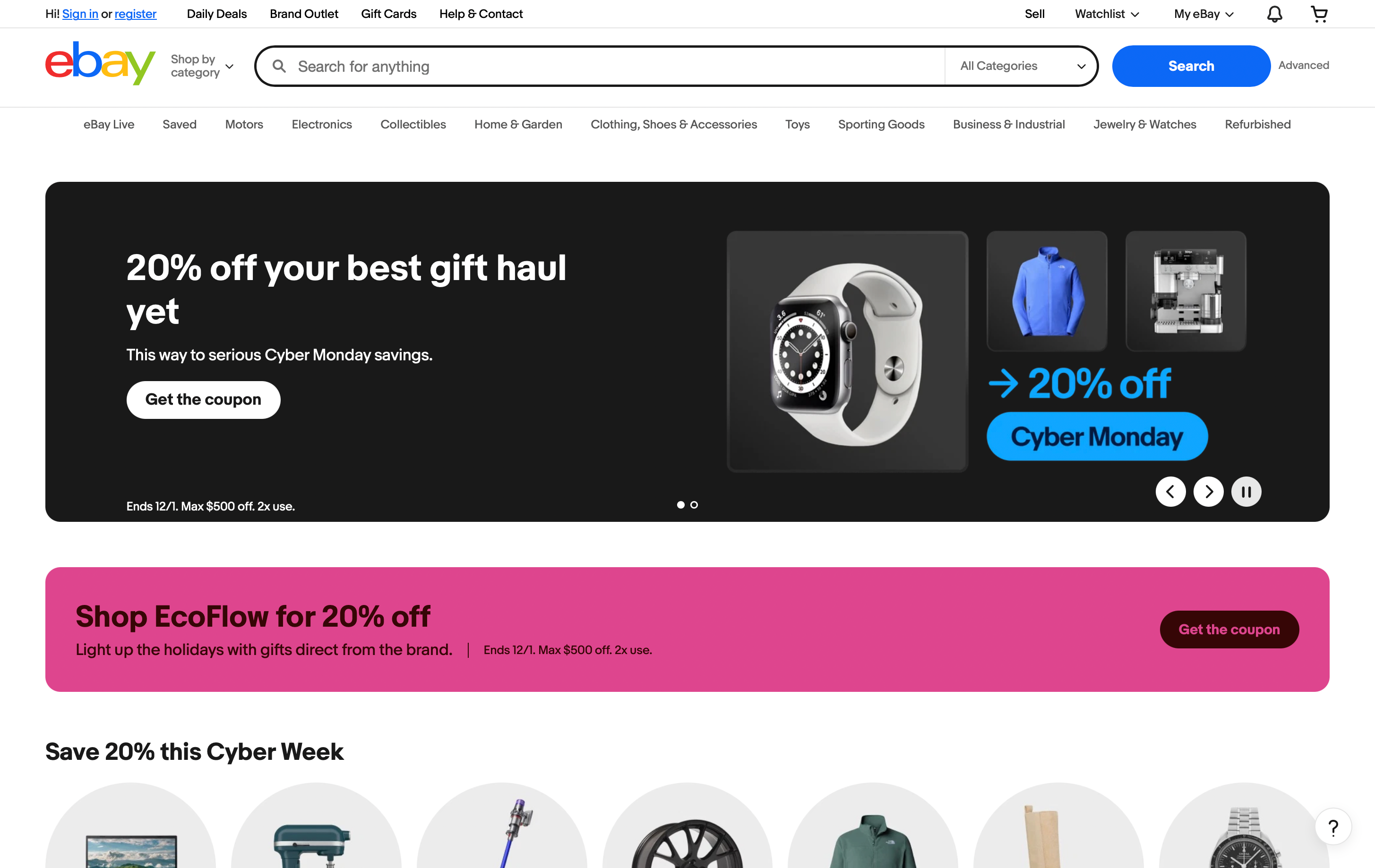
eBay blends consumer-to-consumer selling with business listings. Its roots in auctions make it distinct: customers can bid, accept offers, or buy at fixed prices.
The platform is known for niche products, collectibles, refurbished electronics, and specialty categories where price comparison and variety matter. Professional sellers also use eBay to reach shoppers who prefer alternative formats such as auctions or used goods.
3. Etsy

Etsy focuses on handmade, custom, and niche products supplied mostly by small businesses. The marketplace attracts customers looking for unique items rather than mass-market goods. Seller profiles, storytelling, and product presentation play a bigger role here than in generalist marketplaces.
Etsy shows how a focused target market can support a strong marketplace without competing directly with large marketplace giants.
4. Mercado Libre (Latin America)

Mercado Libre is the leading B2C marketplace across Latin America. Many sellers rely on Mercado Libre’s logistics and payment services, which are adapted to regional needs, including cash-based payment options, local wallets, and delivery networks built to handle varied last-mile conditions.
Mercado Libre’s success shows how a regional marketplace can outperform global competitors by aligning tightly with local shopping behavior, preferred payment methods, and delivery expectations.
B2C marketplace business model challenges and requirements
Running a B2C marketplace is not the same as running a traditional online store. The model introduces a second group you must support – third-party sellers – and that creates new operational pressures.
Below are the areas that usually shape the early strategy and requirements for a marketplace project.
1. Balancing growth with product quality
A larger catalog attracts more customers, but rapid onboarding can introduce low-quality listings, inconsistent product descriptions, or unreliable sellers. A marketplace has to grow its assortment without letting quality slip. This means defining clear listing standards, seller rules, and basic controls from day one.
2. Handling many independent sellers
Each seller brings unique workflows, tools, support needs, and service levels. Some rely on spreadsheets, others expect API integrations. This variation affects how you design onboarding, dashboards, reporting, payouts, and support processes. The marketplace has to offer enough structure for consistency while staying flexible enough for different seller types.
3. Multi-seller order complexity
A single customer checkout may involve several sellers, each with separate inventory, shipping methods, and handling times. The marketplace must coordinate these steps in the background while giving the buyer one clear view of the order. This requires reliable order splitting, tracking, and communication tools.
4. Payment flows and risk controls
Payments in a marketplace involve more steps than in a standard online store. Funds may need to be held until items ship, and refunds may involve multiple parties. You also take on responsibility for fraud checks, chargeback handling, and payout accuracy. Clear rules and predictable payout timing are core requirements for seller trust.
5. Customer expectations shaped by large platforms
Shoppers compare every marketplace to Amazon, Mercado Libre, and other leaders. Fast delivery, simple returns, transparent pricing, and good product discovery are now baseline expectations. A new marketplace has to match these expectations quickly to build repeat usage, not just one-off purchases.
6. Operational load on internal teams
A marketplace introduces new daily tasks: reviewing new sellers, approving listings, resolving disputes, moderating reviews, handling returns across multiple sellers, and supplying insights to the revenue team. Each of these areas requires tools, automation, and clear processes to avoid overwhelming internal staff.
7. Technology fit and scalability
A marketplace grows faster than a typical ecommerce site – often in the number of SKUs, not just traffic. The platform needs stable search performance at scale, reliable APIs for sellers, and an architecture that can handle new payment methods, logistics partners, and more sellers without constant rework.
A marketplace that plans for these realities early – through structured seller tools, strong catalog standards, reliable order flows, and scalable tech – avoids many of the bottlenecks that slow down marketplace growth after launch.
These challenges directly influence the feature set described in the next section.
24 features you need in your B2C marketplace (why they matter & best practices)
When you translate marketplace strategy into a concrete feature set, it helps to start from something already used in real projects.
Mercur, our marketplace platform, is built for companies running multi-vendor marketplaces. The platform covers seller onboarding, catalog tools, payouts, order orchestration, analytics, and the integrations marketplace operators rely on. The structure of its modules reflects what most marketplaces need once they go beyond early experiments and start dealing with higher-order volumes, more sellers, and a growing catalog.
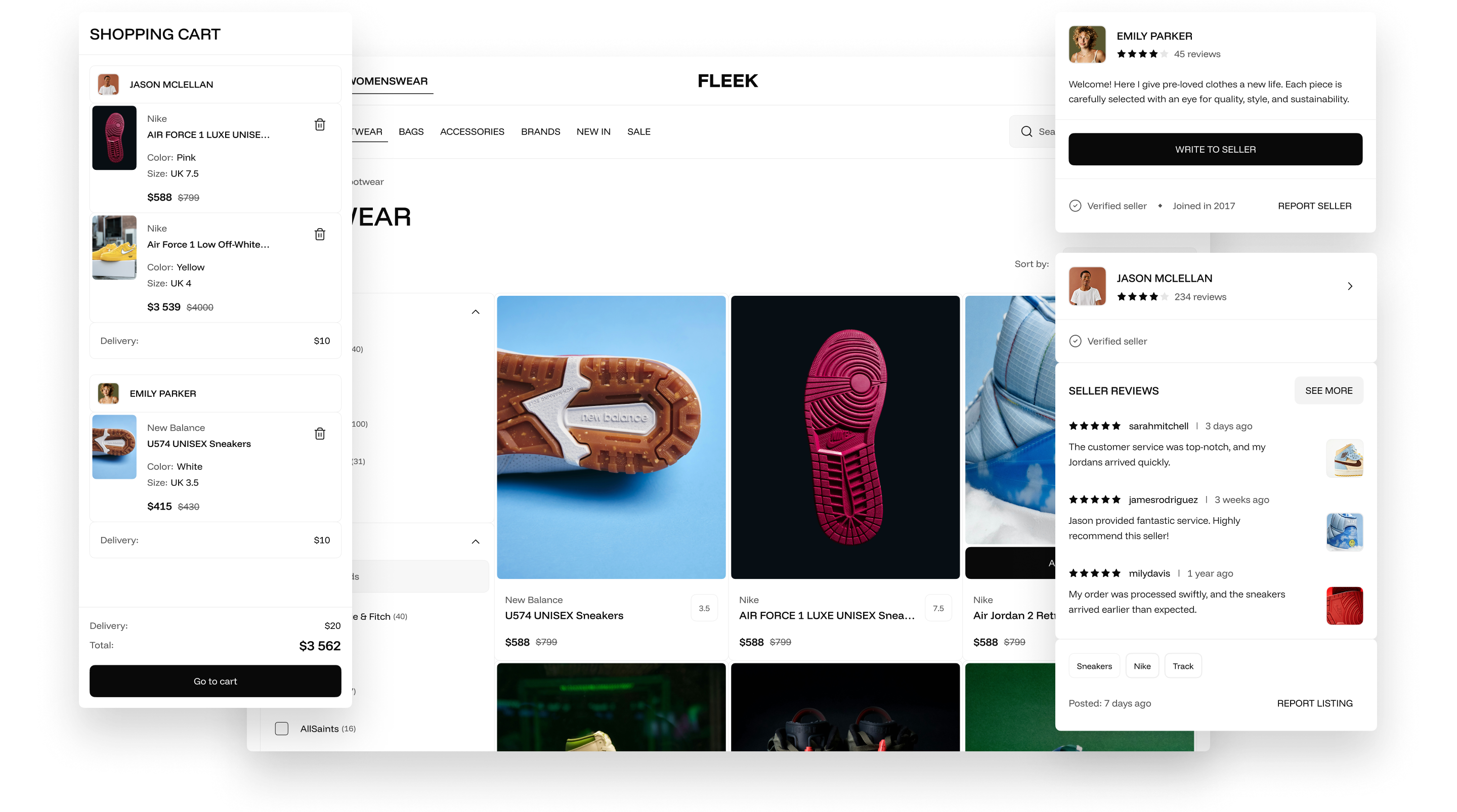
Patterns we see in Mercur line up with what independent research highlights. Industry research from McKinsey, BCG, Deloitte, and others points to similar themes in how marketplaces grow and where they run into problems.
Taken together, these inputs shape the checklist below. Each of the 24 features is described in the same way: a short explanation of what it does, a “why it matters” view for customers, sellers, or operators, and a set of best practices you can use as a starting point for your own roadmap.
As a group, they form a practical reference for planning a new marketplace, upgrading an existing platform, or comparing marketplace software. The structure also makes it easier to separate “nice to have” ideas from the features that directly influence day-to-day operations.
Seller (Vendor) Management

This part focuses on the seller side of your marketplace: how vendors join the platform, how they manage their listings and orders, and how you handle payouts. Strong seller management creates predictable operations and helps you grow your assortment without losing control.
1. Seller Onboarding & Verification
The platform provides an intuitive onboarding process for third-party sellers, including registration, business verification, and KYC (know-your-customer) checks. This ensures only qualified, legitimate vendors join the marketplace.
A smooth onboarding lowers entry barriers for new sellers, allowing the marketplace to rapidly expand its product assortment. Meanwhile, robust verification (e.g., identity, tax, and compliance checks) protects the marketplace’s integrity by vetting sellers upfront.
Why It Matters
In a marketplace, more sellers mean more products and greater selection, which attracts more buyers.
We see a direct link between seller count and sales – early on, adding sellers drives higher gross merchandise value (GMV). Sellers today often list on multiple marketplaces, and over 60% plan to increase the number of marketplaces they use. If onboarding is cumbersome, quality sellers will go elsewhere.
At the same time, poor vetting can let bad actors in, damaging customer trust. Careful seller screening safeguards the brand’s reputation, for example, top marketplaces strictly vet new sellers and set standards they must meet.
Establishing trust and safety measures from the start not only protects the platform’s brand but also enhances user experience and loyalty.
Best Practices
- Offer a guided, self-service signup with clear steps and quick document verification (e.g., automated ID checks) to onboard sellers in minutes, not days.
- Enforce minimum qualifications (such as valid business credentials and product quality certificates) and perform background checks before approving sellers.
- Implement a tiered onboarding: allow new sellers to list products quickly, but hold payouts until verification is completed (“trust but verify” approach).
- Clearly communicate marketplace policies (fees, quality standards, prohibited items) during onboarding and require sellers to accept them.
- Provide human support or training materials for new sellers to reduce friction – for instance, some marketplaces host webinars or offer onboarding specialists for large vendors (a practice seen on Amazon and others).
2. Seller Dashboard & Self-Service Tools
Once onboarded, sellers have access to a dedicated portal or dashboard to manage their storefront. This feature includes tools for product listing (adding descriptions, images, pricing), inventory management, order processing, and customer communication – all in one place.
Advanced dashboards also provide analytics on sales, traffic, and customer feedback. By empowering sellers with self-service capabilities, the marketplace ensures vendors can operate efficiently at scale without constant manual intervention.
Why It Matters
A superior seller experience is critical for marketplace growth. Sellers who find it easy to manage their business will list more products and stay active, which in turn boosts marketplace GMV. Marketplaces that provide rich tools and a supportive environment help sellers grow their sales – creating a win-win cycle where sellers’ success is the platform’s success.
Moreover, competition to attract and retain sellers is increasing, so marketplaces must differentiate with value-added services for sellers. Sellers are demanding more support, such as better data insights, marketing tools, and training. Providing an informative dashboard with product performance analytics or trending insights (e.g., “top searched terms” or pricing recommendations) can be a value-added service that keeps sellers engaged.
Gartner notes that marketplace operator applications should let organizations “manage seller onboarding, product catalogs, and monitor business performance to ensure a compelling customer experience” – in practice, the seller portal is where much of that happens.
Best Practices
- Include an integrated catalog manager where sellers can bulk-upload products, update stock levels in real time, and sync with their own inventory systems via API.
- Provide a unified order management view so sellers can see all their marketplace orders, print shipping labels, and update order statuses easily.
- Surface key performance metrics (sales trends, conversion rates, customer ratings) on the dashboard with alerts for issues (e.g., low stock, slow shipping times) – this transparency helps sellers improve and aligns with marketplace standards.
- Offer training and support resources in the portal (FAQ, how-to guides, even community forums or a seller helpdesk chat) to help sellers optimize their listings and marketing. Top marketplaces even host events or webinars for sellers.
- Enable self-service for administrative tasks like payment info updates, returns handling, and dispute resolution, so sellers can resolve issues without needing manual marketplace intervention.
3. Seller Performance & Quality Control
The marketplace monitors seller performance through defined metrics and enforces quality standards. This feature involves tracking metrics like order defect rate, late shipment rate, customer ratings, and responsiveness to buyer inquiries.
Sellers typically have to meet certain service-level agreements (SLAs) – for example, maintaining low defect rates and quick response times. A system is in place to scorecard sellers and provide feedback or warnings if standards slip. If a seller consistently underperforms or violates policies, the platform can suspend or remove them.
By actively managing seller quality, the marketplace protects customers from bad experiences.
Why It Matters
In B2C marketplaces, the customer’s trust in the platform is heavily influenced by the behavior of third-party sellers. Retailers operating a marketplace must strike a balance between scale and control – on one hand, they want many sellers, on the other, their brand reputation is at stake with every seller’s actions. Trust is a key reason consumers choose retailer-led marketplaces over a generic “everything store.”
Best-in-class marketplaces therefore carefully vet and then continuously monitor sellers, enforcing quality rules. For example, Walmart’s marketplace requires sellers to keep an order defect rate below 2% and to respond to customer service emails within 24 hours, as outlined in its seller SLA. These kinds of standards ensure buyers get a consistent, positive experience even when purchasing from different vendors.
Proactively managing seller quality reduces fraud, counterfeit products, and poor service. It also helps top performers thrive, creating a competitive but trustworthy ecosystem.
Best Practices
- Define clear KPIs and SLAs for sellers (e.g. minimum star rating, max defect rate, shipping time) and display their performance dashboard so they know where they stand.
- Automate alerts and penalties: for instance, send warnings if order defect rate exceeds a threshold; temporarily pause selling rights if metrics fall too low. Follow a progressive discipline system to give sellers a chance to improve.
- Conduct regular audits for policy compliance and product quality. Use technology to flag potentially counterfeit or prohibited items (e.g. keyword filters, image recognition for logos) and remove violating listings instantly.
- Implement a customer feedback loop – after each order, buyers can rate the seller or product. Highlight consistent negative feedback for review. Also, feature high-performing sellers (e.g. “Top Rated Seller” badges) to incentivize quality service.
- Provide guidance to underperformers: rather than only punitive action, offer resources or coaching to help struggling sellers meet standards. Marketplaces that invest in seller success (even via account managers for big sellers) often see better overall results.
4. Commission & Payout Management
This feature automates the financial transactions between the marketplace operator and third-party sellers. The platform calculates marketplace fees or commissions on each sale and handles the disbursement of funds to sellers after a sale is completed.
It typically includes a commission engine (to apply different commission rates by category or seller tier) and an integrated payout system to transfer earnings to seller bank accounts or digital wallets on a set schedule. Transparent financial statements are provided so sellers can reconcile their earnings.
Essentially, this feature makes sure that the marketplace operator reliably gets their share of each transaction and sellers are paid on time, building trust in the business model.
Why It Matters
The commission model is at the heart of marketplace revenue. B2C marketplace operators usually take a percentage of each transaction – often around 8–15%, and up to 25–30% in some categories like fashion. This makes marketplaces profitable with relatively low capital investment, contributing an estimated 7–9% EBITDA margin for retailers.
A well-designed commission and payout system ensures cash flow for both the platform and sellers without manual effort. From the seller’s perspective, predictable and timely payouts are crucial, any hiccups in payments can erode seller trust and willingness to continue on the platform. For the marketplace, automated fee handling means accurate revenue capture and fewer financial errors.
Moreover, when expanding globally, the system may need to handle multi-currency transactions and local taxation – robust payout management is necessary for scalability.
Best Practices
- Clearly communicate the fee structure to sellers (commission rates, subscription fees if any, payment processing fees, etc.) and show fee breakdowns per order in their dashboards for transparency.
- Use an automated split-payment system or escrow service: when an order is placed, automatically allocate the commission to the marketplace and the remainder to the seller, to be released upon order completion. This reduces manual reconciliation.
- Support multiple payout methods and currencies (ACH, wire, PayPal, etc.), so sellers worldwide can receive funds conveniently. Ensure compliance with local tax withholding and reporting obligations in each region.
- Set a regular payout schedule (e.g. weekly or bi-weekly) and allow sellers to track upcoming payouts. Provide downloadable statements for their accounting.
- Implement financial risk controls – for example, hold payouts for a defined period for new sellers or high-risk transactions to account for refunds/chargebacks, and use fraud detection to flag any abnormal transaction patterns before releasing funds.
Product Discovery & Catalog Experience

Here, we look at everything that helps customers find the right product: search, navigation, content quality, and reviews. Clear structure and reliable information reduce friction and make large catalogs easier to browse.
5. Advanced Search & Navigation
The marketplace offers powerful search and browse capabilities to help shoppers sift through thousands or millions of products. This includes a keyword search bar with intelligent autocomplete and spelling correction, robust filtering (by category, price, brand, ratings, etc.), and sorting options (by price, popularity, newest, etc.). Category navigation menus and facets are well-organized, often reflecting how consumers think of product hierarchies.
The goal is to make it effortless for users to narrow down to the exact item they want. A well-implemented search can also handle natural language queries and synonyms (for example, knowing that “phone” and “cellphone” are the same).
Why It Matters
One risk of a large marketplace assortment is the “paradox of choice” – an overwhelming catalog can frustrate shoppers if they cannot quickly find what they need. In fact, research found that more than half of shoppers on major marketplaces (like Walmart and eBay) struggled to locate their desired products or the best price for those products. Poor navigation or search directly hurts conversion rates; customers will abandon the site if results are irrelevant or too hard to filter.
A good discovery experience drives sales by connecting the right product to the right buyer. Optimizing “findability” is therefore crucial.
Top marketplaces invest heavily in search algorithms and UX. Comprehensive filtering and sorting options help users handle the huge SKU count. Gartner emphasizes product catalog management as a core capability – marketplace platforms must manage extensive catalogs and make them shoppable.
By improving search relevance and site navigation, marketplaces can significantly reduce frustration and increase conversion.
Best Practices
- Use a modern search engine (with AI capabilities) that supports autocomplete suggestions, recognizes synonyms, and learns from user behavior (clicks, purchases) to continuously improve result relevance.
- Provide rich filtering and sorting on search results and category pages – allow users to combine filters (e.g. by size, color, price range, rating) and remember their selections as they navigate.
- Implement category-specific attributes for filtering. For instance, in electronics, filter by screen size or memory; in fashion, by size or material. This ensures filters are meaningful to the product type.
- Optimize site navigation menus: use clear category names and logical sub-categories. Include a breadcrumb trail on product pages so users can backtrack to broader categories easily.
- Monitor search analytics (no-result queries, top searches) and continuously tune results. If many users refine or leave after certain searches, it’s a signal to improve those queries’ results. Also, avoid “dead ends” – always suggest alternative products or categories if a search yields few results.
6. Personalization & Recommendations
Leveraging data on user behavior, the marketplace provides personalized discovery elements. This feature includes recommendation engines (“You might also like”, “Recommended for you”), personalized homepages or emails, and adaptive content based on browsing history.
Machine learning models analyze a user’s past views, searches, and purchases, as well as what similar users did, to surface relevant products. Personalization also extends to marketing, such as personalized deals or search results ranked differently for each user.
By tailoring the shopping journey to individual preferences, the marketplace can increase user engagement and basket size.
Why It Matters
Consumers have come to expect a personalized experience in e-commerce. Higher expectations for personalization are even fueling niche marketplaces that cater to specific segments or preferences. A generic, one-size-fits-all storefront misses opportunities to delight customers with what they are likely to want.
Personalization has a direct impact on conversion and user satisfaction. BCG found that enhancing basic navigation with advanced personalization algorithms can significantly improve engagement and conversion rates. Alibaba, for example, deployed sophisticated AI across its ecosystem to offer personalized recommendations from a catalog of over 200 million products. The result was a more engaging shopping experience despite the massive assortment.
When done right, personalization means each shopper sees a version of the marketplace most relevant to them – leading to increased time on site, higher spend, and repeat visits. It also builds customer loyalty as users feel the platform “understands” their needs.
Best Practices
- Implement a collaborative filtering and/or content-based recommendation engine on product pages (e.g. “Customers who viewed/bought X also liked Y”) and in the cart (“Frequently bought together”) to encourage cross-sell and upsell.
- Personalize the homepage and landing pages for logged-in users – showcase recently viewed items, new arrivals in categories they browsed, or deals in their favorite categories.
- Use segment-based personalization for new or anonymous users (e.g., by inferring a segment from the referral source or geo-location). For example, highlight region-specific popular items or category trends.
- Incorporate personalization into search ranking: if a user often buys athletic apparel, a search for “shoes” might show sneakers higher up for them. Ensure the search algorithm can utilize user context when available.
- Continuously test and refine personalization strategies – use A/B testing to ensure recommendations are actually driving clicks and sales. Avoid overly narrow recommendations that might “filter bubble” the user; there’s a balance between relevance and discovery of new products.
7. Competitive Pricing & Buy Box Algorithm
For marketplaces where multiple sellers can offer the same product. A Buy Box feature identifies the optimal offer to show prominently on the product page.
The system compares sellers’ prices, shipping speed, seller ratings, and other factors to automatically select which seller “wins” the main purchase button (with others listed as alternatives). Even in single-seller listings, dynamic pricing tools can help sellers price competitively by providing market intelligence.
Overall, this feature ensures customers see compelling prices and options, fostering a competitive environment among sellers. It may integrate repricing tools and price transparency dashboards for both sellers and the marketplace operator.
Why It Matters
Pricing is one of the top reasons consumers choose marketplaces – shoppers expect competitive pricing and good deals in exchange for their business. If the same item is sold by multiple vendors, the marketplace must avoid confusing the buyer with dozens of listings, a Buy Box streamlines the experience by featuring the best offer.
BCG notes that consumers will switch to a retailer’s marketplace from an “everything store” if prices are similar, so ensuring price competitiveness is crucial. Hosting multiple third-party sellers for the same SKU naturally drives prices down, but you need an algorithm to surface the optimal combination of price and service. The majority of leading marketplaces, including Amazon, eBay, and others, use such competitive pricing algorithms to increase customer trust that they’re getting a good deal.
For sellers, dynamic pricing tools can help them stay competitive while still maintaining margins. Ultimately, a well-tuned pricing feature increases conversion (customers are more likely to buy when they see a great price) and keeps the marketplace fair and efficient.
Best Practices
- Implement a Buy Box on product detail pages for identical products: determine the winning offer based on a weighted algorithm (price, shipping time/cost, seller rating, stock availability, etc.). Continuously refine this algorithm to balance customer value (low price, fast delivery) with seller fairness.
- Provide price comparison visibility – if not a single Buy Box, at least make it easy for shoppers to compare offers. For example, show a summary like “5 other sellers from $X” with a link. Transparency builds trust that the marketplace isn’t artificially marking up prices.
- Offer sellers dynamic pricing tools or suggestions. For instance, show how their price compares to the lowest price for that item, or allow them to use automated repricers that adjust their prices within rules they set. This keeps the marketplace responsive to supply-demand changes.
- Monitor for price gouging or anti-competitive pricing. Have rules to prevent sellers from excessively overcharging (especially on essential items) or colluding to fix prices. During demand spikes, ensure the platform can step in or cap prices if needed to maintain customer trust.
- Integrate promotions into the algorithm: if a seller offers free shipping or a bundle deal, factor that into their offer’s attractiveness. The Buy Box logic should consider total cost to the consumer, not just item price. Also, feature any price guarantees or price-match policies prominently to reassure customers they’re getting the best deal.
8. Rich Product Content & User Reviews
Product detail pages in the marketplace are rich with information: high-quality images (and maybe videos), detailed descriptions, specifications, and customer reviews and ratings.
Shoppers can read feedback from other buyers, ask questions (with answers from sellers or the community), and see ratings that reflect overall satisfaction. The platform may standardize content through templates or attributes (especially important if multiple sellers share a listing). User-generated content like reviews and photos provides social proof of quality.
This feature set ensures that buyers have all the information needed to make confident purchase decisions, mimicking the tactile research they might do in a store.
Why It Matters
In e-commerce, especially when buying from third-party sellers, trust and information are critical. Detailed, accurate product content reduces uncertainty about the item. More importantly, customer reviews significantly influence purchase behavior by instilling trust through social proof.
Studies show that displaying reviews can dramatically boost conversion rates – one analysis found that for higher-priced products, showing reviews led to a 380% increase in conversion, and even for lower-priced items, conversion jumped ~190% when reviews were present. Overall, products with five or more reviews convert much more than those without. Reviews are among the most consulted resources for consumers; in fact, 90% of consumers consider ratings and reviews when making a purchase decision.
By enabling buyers to learn from peers (both positive and negative feedback), the marketplace fosters transparency and trust. Rich content and UGC (user-generated content) also keep customers engaged on the site longer and improve SEO (search engines favor pages with ample content and frequent updates, which reviews provide).
Best Practices
- Enforce consistent product listings: if multiple sellers sell the same item, use a single product page with a unified title, description, and shared reviews. This avoids duplicate entries and concentrates reviews to build credibility.
- Standardize attributes and specs in product descriptions. Use a PIM (Product Information Management) approach: e.g. for electronics list dimensions, weight, battery life in a structured way. This helps comparison and feeds into filters.
- Encourage customers to leave reviews by sending post-purchase emails or incentives (without biasing the review). Highlight that honest feedback helps the community. Many marketplaces see a virtuous cycle: more reviews → higher traffic and conversion → more sales → even more reviews.
- Implement a review moderation system to filter out inappropriate content, fake reviews, or spam. Use verified purchase badges to indicate genuine reviews. Display a mix of positive and critical reviews (shoppers look for negative reviews to gauge credibility; 82% of shoppers specifically seek out negative reviews to check authenticity).
- Go beyond text – allow user-submitted photos or videos of the product in use, and a Q&A section where prospective buyers can ask questions answered by past buyers or sellers. This interactive content builds a community feeling and provides deeper insight (for example, real photos can show scale or fit better than stock images).
Order Management & Fulfillment

This section covers what happens after a customer clicks “buy.” Multi-seller carts, order splitting, shipping, delivery, and returns all need to work in the background while the customer receives one clear experience.
9. Order Orchestration & Multi-Seller Cart

This feature handles orders that involve multiple third-party sellers in a single checkout. It orchestrates the workflow of splitting an order by seller, routing each portion to the appropriate vendor, and tracking each sub-order.
Customers can add products from different sellers into one universal shopping cart and checkout in one transaction. Behind the scenes, the system generates separate orders for each seller while maintaining a unified view for the buyer.
Order orchestration also includes inventory reservation (to prevent overselling) and coordination of any marketplace-managed services (like payment hold until shipment or fraud checks). Essentially, this feature ensures that a complex multi-vendor purchase happens seamlessly from the shopper’s perspective.
Why It Matters
A hallmark of the marketplace model is assortment breadth without owning inventory. But with many independent sellers, the order management challenge is non-trivial.
Customers expect a smooth experience akin to a single retailer – one checkout, one confirmation, and clarity on delivery, even if items ship separately. If the platform couldn’t handle multi-seller orders elegantly, buyers would be forced to checkout separately for each seller, causing inconvenience and likely cart abandonment.
Efficient order management is also key to scalability: marketplaces can add new sellers or SKUs “in days” because the platform can operationalize new items quickly. Forrester notes that order and inventory management are critical platform features to assess for marketplace software. A robust order orchestration system improves operational efficiency by automatically handling the logic of splitting orders, notifying sellers, and aggregating status.
It also provides the marketplace operator visibility into all transactions for customer service and analytics. Without it, fulfilling orders at scale (especially during peak periods or flash sales) would be chaotic.
Best Practices
- Provide a unified checkout for the customer – even if an order contains items from five sellers, the customer completes one payment. After checkout, communicate clearly which items may ship separately and provide a consolidated order summary with sub-order breakdowns.
- Ensure real-time inventory synchronization. Integrate with sellers’ systems or provide inventory management tools so that stock levels are accurate. When an item is added to the cart, reserve it (or decrement inventory) to avoid overselling, especially for popular products.
- Automate order routing and notifications: as soon as an order is placed, the system should split it by seller and send each seller their portion (via email, dashboard, or API). Each seller should get the necessary details to fulfill their item(s) – product, quantity, shipping method, etc.
- Track each sub-order, but also aggregate statuses for the buyer. For example, in the user’s account or order status page, show each item’s status (shipped, delivered) with seller info, but also an overall view. Send proactive updates if one part of the order is delayed.
- Implement logic for combined shipments or dropshipping if applicable. If the marketplace operator or a partner provides a consolidation service (e.g. grouping items at a distribution center to send in one box), the OMS should accommodate that. Similarly, support split shipments (partial fulfillments) if a seller needs to send from multiple warehouses. Having a flexible order model ensures you can optimize costs and speed.
10. Shipping & Delivery Integration
This feature provides integration with logistics carriers and supports various delivery options. Sellers (or the marketplace, if using its own fulfillment network) can generate shipping labels directly from the platform, get real-time shipping rates, and offer multiple shipping speeds (standard, expedited, etc.) to buyers.
After dispatch, tracking numbers are uploaded so customers can track shipments within the marketplace site/app.
For marketplace operators with advanced logistics, this may extend to offering services like FBA (Fulfilled by Amazon)-style warehousing or coordinating last-mile delivery. T
he goal is to ensure products sold on the marketplace are delivered reliably and quickly, meeting modern consumer expectations (think two-day or same-day delivery options).
Why It Matters
Fast and reliable delivery is a core part of the customer experience. Marketplaces have become popular partly because shoppers appreciate the variety of delivery options and the convenience they offer. In a BCG consumer survey, marketplaces outscored traditional e-commerce on delivery options and competitive pricing.
If a marketplace cannot offer shipping speeds and prices comparable to major players, customers may opt for competitors. Additionally, smooth integration with carriers reduces errors (like wrong addresses or lost packages) and saves time for sellers by streamlining label printing and tracking.
Retailer-run marketplaces often leverage their existing supply chain, for example, allowing customers to buy from marketplace sellers but pick up in the retailer’s store, or return there, which can be a key differentiator versus pure online rivals.
A well-integrated shipping feature also supports global expansion – being able to present international shipping options and duties calculation opens the marketplace to more customers and sellers.
Best Practices
- Integrate multiple shipping carriers (UPS, FedEx, DHL, USPS, local couriers, etc.) and allow sellers to easily compare rates or use their preferred carrier. Real-time rate APIs ensure accurate costs at checkout.
- Offer shipping choice to customers: at checkout, present options (e.g. free standard shipping in 5–7 days, paid express in two days). Display expected arrival dates for each option to set clear expectations.
- Provide sellers with a shipping label tool in their dashboard. Once they input package weight/dimensions, they can buy and print labels at marketplace-negotiated rates. This encourages sellers to ship on time and standardizes tracking info.
- Surface tracking information to customers in one place. After purchase, buyers should see all their packages with status (in transit, out for delivery, delivered) either in the marketplace account or via notifications. Send automated shipping confirmation and delivery confirmation emails/SMS.
- Embrace omnichannel fulfillment if applicable: if you are a retail-based marketplace, allow options like BOPIS (buy online, pick up in store) or ship-to-store. Use your physical stores as nodes for pickup or returns to add convenience (and potentially drive foot traffic to stores).
11. Returns & Refunds Management
The marketplace has a streamlined process for customers to return products and receive refunds or exchanges, even when products were sold by different third-party sellers. This includes a self-service returns portal where a buyer can select items to return, receive an RMA (Return Merchandise Authorization) or QR code, and a return shipping label if applicable.
The system coordinates with sellers on return approvals and tracks the returned items. If the marketplace operator handles returns centrally (in the case of a managed returns program), it will direct items to a warehouse or store; otherwise, it provides the seller’s return address and verifies when the seller confirms receipt.
Refunds are then issued through the original payment method in a timely manner. Having clear return policies (e.g. 30-day return window, conditions for eligibility) and displaying them on product pages is also part of this feature.
Why It Matters
A hassle-free returns process is essential to earning customer trust – especially in B2C, where buyers may be unfamiliar with individual marketplace sellers. BCG emphasizes that providing seamless returns for marketplace purchases protects the overall brand and customer experience. Marketplaces have sometimes lagged traditional retailers in customer service, and returns are a pain point that savvy operators can improve.
A generous, easy return policy can be a differentiator that convinces customers to buy (knowing they can return if needed). It also drives loyalty, customers are more likely to shop again if they have a smooth return/refund experience.
On the flip side, poor returns handling (slow refunds, complicated processes) can lead to customer churn and negative reviews. Operationally, a unified returns solution spares sellers from confusion and ensures accountability – everyone follows the same steps.
Moreover, if the marketplace can leverage physical stores for returns (in a retailer’s case), it turns a potential inconvenience into an opportunity for cross-channel engagement.
Best Practices
- Establish a standard returns policy across the marketplace (e.g. 30-day return for most products, with exceptions for perishables or digital goods). Require sellers to meet or exceed this baseline. Clearly display the return eligibility and process on each product page (this transparency can increase conversion).
- Provide a centralized returns portal for customers: list all past orders, allow selection of items to return, ask the reason for return, and then provide instructions (printable label or QR code for drop-off at a carrier or partner location). Make this process as frictionless as possible – ideally, one-click if using paperless return codes.
- If feasible, offer free returns or local drop-off points to increase convenience, acknowledging that the cost may be factored into seller fees or absorbed as a customer service cost.
- Coordinate with logistics partners or stores to handle returned goods efficiently. For centrally managed returns, ensure quick inspection and restocking or disposal. Use return reason codes to feed back into product quality or description improvements.
- Monitor return rates and reasons by category and by seller. High return rates may indicate misaligned customer expectations or quality issues. Encourage sellers with high return rates to improve descriptions, images, or product quality, and consider enforcement actions if needed.
12. Fulfillment Services (Marketplace-Fulfilled Logistics)
(Optional but powerful feature)
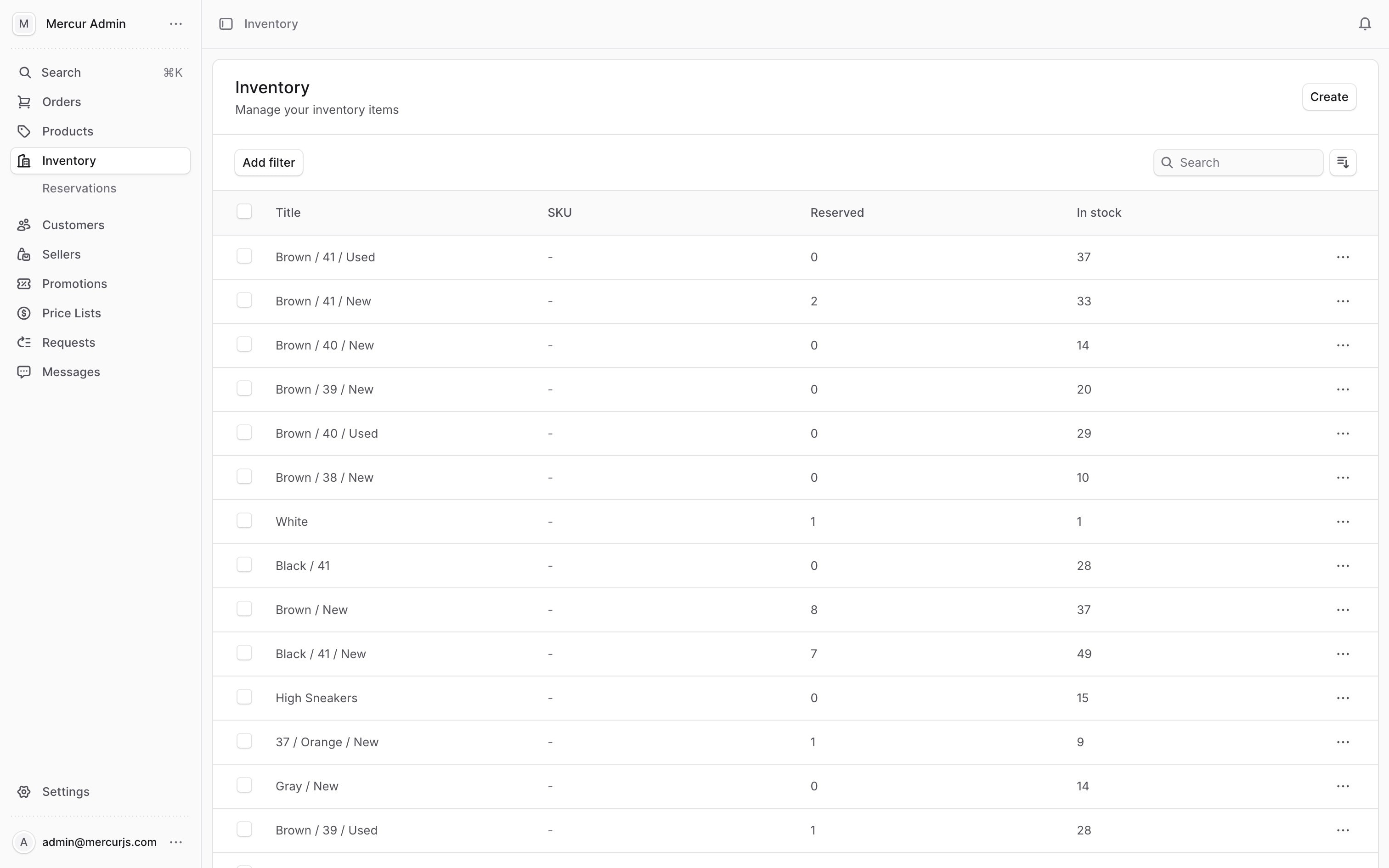
In addition to sellers shipping orders themselves, the marketplace may offer its own fulfillment services. Sellers can send inventory to the marketplace’s warehouses or partner logistics centers, and the marketplace handles storage, picking, packing, and shipping when orders come in.
This is similar to Fulfilled by Amazon (FBA), where participating sellers benefit from faster shipping options and potentially higher visibility (e.g. Prime badges).
Fulfillment services might include inventory management tools, packaging standards, and options for value-added services like gift wrapping or kitting.
For the customer, products fulfilled by the marketplace often come with reliable delivery speed and standardized service levels. For sellers, it offloads logistics complexity and can improve conversion if the marketplace promotes “fulfilled by” items.
Why It Matters
Running logistics is challenging for many small or medium-sized sellers. A marketplace that offers fulfillment services can attract more sellers (especially those who lack strong logistics capabilities) and improve overall customer experience by standardizing delivery. BCG points to marketplace-provided services like fulfillment as a key lever for boosting profitability and seller loyalty.
Items fulfilled by the marketplace often have better delivery SLAs and reliability, which in turn increases customer satisfaction and repeat purchases. Additionally, centralized fulfillment can enable faster shipping options (same-day or next-day in some regions) by pre-positioning inventory closer to customers.
It also opens the door for omnichannel services if the marketplace operator is a retailer with stores. From a business perspective, fulfillment services can be an additional revenue stream (storage and fulfillment fees) while also improving the marketplace’s competitive position.
Best Practices
- Define clear eligibility and pricing for fulfillment services: outline storage fees, pick-and-pack fees, and any surcharges (e.g. for oversized items). Provide a calculator so sellers can estimate costs versus benefits.
- Standardize packaging and shipping SLAs for marketplace-fulfilled items. For example, commit to shipping within one business day and specific delivery windows. Use branded packaging if it supports your brand strategy.
- Offer inventory visibility and tools: sellers should see their stock levels at each fulfillment center, inbound shipment status, and sell-through rates. Provide alerts for low stock to avoid out-of-stock issues.
- Market the benefits to sellers (higher sales due to fast shipping badges, worry-free logistics) and to customers (filter or badge for “marketplace fulfilled” items that come with reliable delivery). For example, highlight items with “Fulfilled by [Marketplace]” as eligible for premium shipping options.
- Continuously monitor performance – track metrics like order defect rates, late shipment, and warehouse processing times. Keep an eye on costs too; optimize inventory placement across fulfillment centers to minimize delivery time and shipping cost. If certain sellers or SKUs underperform (e.g. very low sell-through leading to long storage), refine the program rules (like storage time limits or discounts to move old stock).
Payments & Transaction Management
Payments involve more than charging a card. A marketplace has to route funds to multiple sellers, handle refunds, and reduce fraud risk. This section outlines how transactions move through the system and what protects both sides.
13. Multiple Payment Options & Checkout Flexibility
The marketplace supports a wide variety of payment methods to accommodate customer preferences. This includes credit/debit cards, digital wallets (Apple Pay, Google Pay), PayPal, Buy Now Pay Later (BNPL) plans, bank transfers, and even local payment options or cash-on-delivery where relevant.
A single checkout process handles payments for multi-seller carts, splitting funds to sellers internally. The checkout is optimized for simplicity (minimal steps, guest checkout available) and mobile responsiveness.
By offering multiple trusted payment options and a smooth checkout UX, the marketplace maximizes conversion chances.
Why It Matters
Online shoppers have strong preferences for how they pay, and a lack of their preferred method can lead to cart abandonment. According to a recent study, 70% of consumers consider the availability of their preferred payment method to be very or extremely influential when choosing where to shop online.
Marketplaces are seen as leaders here – 53% of shoppers said online marketplaces are best at offering a range of payment methods, far more than those who felt the same about brand-owned websites.
If a marketplace limits payment choices, it risks losing sales (for example, many younger consumers might abandon a purchase if options like PayPal or BNPL aren’t available). Research also shows that around 10% of checkout abandonments are because “there weren’t enough payment methods” offered.
By covering all popular payment types, a marketplace can cater to global audiences and different demographics. Additionally, features like saved cards, one-click payments, or installment plans improve user experience and encourage larger purchases.
In summary, a flexible payment feature directly impacts conversion rates and customer satisfaction in a B2C marketplace.
Best Practices
- Offer all major payment methods relevant to your customer base: at a minimum, support Visa, MasterCard, Amex, leading digital wallets, and PayPal. For regions like Asia or Latin America, include region-specific options (e.g. Alipay, WeChat Pay, MercadoPago).
- Integrate BNPL services (Afterpay, Klarna, etc.), especially for higher-value goods – many consumers appreciate the flexibility, and lack of BNPL can cause drop-off (one survey found 40% of BNPL users would abandon a cart if BNPL wasn’t offered).
- Ensure the checkout flow is streamlined: allow guest checkout (don’t force account creation), minimize form fields, and provide a progress indicator. The form should automatically format credit card inputs, detect card type, and support address auto-complete to reduce typing.
- Implement mobile-friendly and one-click payments: support Apple Pay/Google Pay, which authorize with a biometric tap, and consider letting logged-in users save a card for one-click purchase. Many marketplace visits are mobile, so a clunky mobile payment experience will hurt conversion.
- Show security trust signals during checkout (lock icons, “secure payment” notes, SSL certificates) and be transparent about any extra fees. Also, if the order contains multiple sellers, reassure the customer that it’s still one secure transaction (the platform will handle splitting behind the scenes).
14. Secure Payments & Fraud Prevention
The marketplace employs robust security measures to protect transactions and prevent fraud. This includes PCI-compliant payment processing (ensuring card data is encrypted and not stored insecurely), fraud detection systems that flag suspicious orders, and account protections like OTP or two-factor authentication for high-risk transactions.
It may also use escrow or payment holds – for example, holding the buyer’s payment until the seller ships the product, to safeguard against scams. Both buyers and sellers are covered by these safety measures: buyers won’t be charged fraudulently, and sellers are protected from illegitimate chargebacks when possible.
Identity verification during account creation or checkout might be triggered for large purchases or new users (e.g. verifying an email or phone, or in some cases ID checks for high-value goods).
Overall, the focus is to maintain trust in the marketplace as a safe place to transact.
Why It Matters
Trust is the currency of online marketplaces. If users don’t feel their payment information is safe or fear fraud, they will not buy. A significant portion of shoppers – nearly 2 in 10 (19%) – have abandoned orders because they didn’t trust the site with their credit card info. Moreover, online fraud is a growing concern: over half of US consumers feel they’re more of a target for online fraud now than a year ago.
The marketplace, being an intermediary, must protect both sides from fraud that can occur in peer-to-peer settings. Effective fraud screening (using AI and rules to catch stolen cards, fake accounts, etc.) prevents costly chargebacks and financial losses.
Security features like multi-factor authentication add friction but can be applied selectively at high-risk events to bolster safety. Establishing strong trust and safety measures not only prevents financial loss but enhances user experience and loyalty – customers stick with platforms they trust.
Additionally, for sellers, knowing the platform has checks in place (like verifying buyers for expensive orders, or an escrow that ensures they get paid) encourages them to engage more.
Best Practices
- Use a PCI DSS Level 1 compliant payment gateway or processor. Do not store sensitive card data on your servers; tokenize it instead. This reduces breach risk.
- Implement a fraud detection system that examines orders in real time for red flags (mismatched billing/shipping, high-risk IP addresses, velocity of transactions, etc.). Use machine learning models updated with the latest fraud patterns, and employ fraud analysts for manual review of flagged orders.
- Require strong customer authentication for new or high-value transactions. This could be 3D Secure for card payments (Verified by Visa, etc.) or SMS/email verification for first-time buyers. Balance this so that ordinary purchases aren’t overly burdened, but risky ones get extra checks.
- Protect seller payouts with measures like payment holds for new sellers or large transactions until confirmation of delivery. This can prevent scenarios where fraudulent sellers take money and run. Also, have a clear process for dispute resolution to handle chargebacks – possibly the marketplace intermediates so sellers aren’t dealing with banks directly.
- Regularly audit and update security protocols: maintain SSL encryption site-wide, monitor emerging fraud schemes (like triangulation fraud in marketplaces), and educate both buyers and sellers on safe practices (such as recognizing phishing attempts, or encouraging sellers to ship only to verified addresses). A dedicated trust & safety team should continuously adapt policies to reduce risk.
15. Buyer Protection & Dispute Resolution
The marketplace offers guarantees and a structured process to resolve issues between buyers and sellers. Buyer Protection is typically a promise that if a product doesn’t arrive, is not as described, or if the seller fails to honor the return policy, the marketplace will intervene and refund the buyer (often after an investigation).
This feature might be branded (e.g. “A-to-Z Guarantee”) and is a cornerstone for building trust.
For disputes, the platform provides channels for buyers to contact sellers and escalate to marketplace support if needed. A case management system tracks these disputes, and policies dictate how decisions are made (favoring the customer in cases of clear seller fault, for instance).
This feature also includes an abuse prevention aspect – ensuring the system isn’t gamed by fraudulent claims from buyers or sellers.
Why It Matters
Unlike buying directly from a known retailer, marketplace shoppers are dealing with many independent sellers of varying reliability. A strong buyer protection policy assures customers that the marketplace “has their back” if anything goes wrong. This peace of mind is often necessary to convince someone to purchase from an unknown third party.
It’s a competitive differentiator as well – for example, eBay built trust over the years with its Money Back Guarantee, and Amazon’s A-to-Z Guarantee is a key reason consumers feel comfortable buying from third-party merchants on Amazon. If a marketplace lacked such protection, many risk-averse customers would avoid third-party listings entirely.
Moreover, efficient dispute resolution prevents negative reviews and public complaints; it’s part of maintaining the marketplace’s reputation for fairness and safety. Experian notes that trust measures not only protect the brand but also boost loyalty and business in the long run.
On the seller side, a clear process is also helpful – they know that if they follow policies, they have a chance to represent their case. The marketplace acting as a neutral mediator can solve issues faster and more amicably than leaving buyers to chargebacks or legal action.
Ultimately, this feature reinforces that the marketplace is a trusted intermediary, not just a venue.
Best Practices
- Clearly articulate the buyer protection policy on the site (FAQs, help pages, maybe banners for new users). Spell out scenarios that are covered – e.g. non-delivery, item not as described, counterfeit item – and the remediation (typically refund or replacement). This clarity sets proper expectations.
- Provide an easy pathway for dispute resolution: a buyer should be able to click “Problem with order?” and be guided to first contact the seller through the platform messaging. If the seller does not resolve the issue within a set time (say 48 hours), allow the buyer to escalate to marketplace support.
- Use a case management system for escalations: track communication, require evidence (photos of a damaged item, etc.), and have trained support staff review and make fair judgments based on policy. Aim for speedy resolution – faster resolutions mean a better customer experience.
- Protect sellers from abuse as well: ensure buyers can’t exploit the system by falsely claiming non-receipt or damage. For example, require returns of the product (or proof of non-delivery via tracking) before refund when feasible, and track buyers who repeatedly claim issues. Have an appeal process for sellers if they disagree with a decision.
- Localize protection for global transactions – if cross-border, make sure buyers still feel covered. Possibly partner with local return centers or offer localized guarantees (which might involve insurance). Also, adapt to product categories (e.g. for digital goods or services, define what satisfaction guarantee means). By balancing protection with responsible use, the marketplace builds a high-trust environment that encourages more frequent purchasing.
16. Seller Protection & Escrow Services (if applicable)
(Optional complementary feature to Buyer Protection)
In addition to buyer guarantees, the marketplace might offer seller protection or escrow-like features. For instance, ensuring sellers are paid for legitimate transactions even if a fraudulent charge occurs (the marketplace might absorb certain chargebacks), or using escrow to hold funds until delivery, protects both sides.
While buyer protection is more visible, seller protection is about giving good sellers confidence that the marketplace won’t unfairly penalize them. This can include protection against unjustified buyer claims, as well as insurance or guarantees for high-value sales.
Why It Matters
A marketplace is a two-sided network – keeping sellers happy is as important as attracting buyers. If sellers fear they will ship products and lose money to scams or excessive chargebacks, they may leave the platform or build in extra costs.
By offering some seller protections, the marketplace can differentiate itself as being seller-friendly, which helps in vendor acquisition and retention. For example, eBay has seller protection policies that cover sellers when they follow certain rules (like shipping with tracking to the address provided).
This reduces friction and encourages sellers to continue offering competitive products. An escrow approach (holding payment until the buyer confirms receipt or a certain time passes) can increase trust for both parties in high-value transactions (seen in marketplaces like Reverb or StockX).
Overall, while not always advertised, these mechanisms smooth out the payment anxieties in a marketplace and contribute to a stable, scalable operation.
Best Practices
- Clearly define seller protection criteria: if the seller ships with proof of delivery and the item was as described, they should be protected against INR (item not received) or SNAD (significantly not as described) claims that don’t have merit. Communicate these scenarios and uphold them during dispute resolution.
- Use escrow or delayed payment capture for certain transactions: for instance, in services marketplaces, it’s common to hold funds until completion. In product marketplaces, a mild version is releasing payment to the seller only after tracking shows delivery. This ensures the seller gets paid for fulfilled orders but allows the platform to refund easily if not fulfilled.
- Cover payment fraud losses up to a point: if a charge is proven fraudulent after the fact, decide how much liability the marketplace versus the seller bears. Often, marketplaces will cover the loss if the seller followed all recommended procedures (shipped to a verified address, etc.). Having this backstop encourages compliance and peace of mind.
- Provide sellers with support in challenging cases – for example, if a buyer claims an item is fake, and the seller insists it’s authentic, have an expert team or third-party authentication service evaluate. This prevents honest sellers from being wrongfully penalized and shows the marketplace values fairness.
- Maintain open communication with sellers about policy changes or new fraud trends. Solicit feedback from top sellers about pain points in payments or disputes. By involving them, you can fine-tune protection features that genuinely address their concerns, thus fostering loyalty among the vendor community.
Customer Experience & Engagement
Once shoppers find your marketplace, the next step is keeping them active. Support tools, loyalty programs, and community features shape how customers interact with the platform before and after purchase.
17. Customer Service & Support Tools

The marketplace provides robust customer support to assist users before and after purchase. This feature may include multiple channels: in-app chat support, email/ticket system, a help center with FAQs, and possibly phone support for urgent issues.
It empowers customer service reps (CSRs) with a unified Service Dashboard (showing the customer’s orders, messages with sellers, etc.) so they have full context when assisting.
For common questions, AI chatbots might handle initial queries and FAQs, handing off to humans for complex cases. This ensures that buyers (and sellers) can resolve problems like order issues, account troubles, or general inquiries promptly.
High-quality customer service is an extension of the marketplace’s brand promise, especially since issues can involve third-party sellers – the marketplace often needs to mediate or take responsibility to keep users happy.
Why It Matters
Great customer service is a key differentiator for marketplaces, yet many have historically underinvested in it. BCG found that marketplace customer service practices lag behind those of traditional retail sites in some areas, suggesting an opportunity for improvement. Fast, effective support protects the marketplace’s reputation (customers will remember how problems were handled) and can turn a negative experience into a positive one.
It also reduces attrition, a PwC survey noted that a large percentage of consumers will stop using a brand after a bad support experience. From a financial perspective, efficient support reduces disputes, returns, and churn.
BCG advocates “overinvesting in customer service” for marketplace operators as a way to differentiate and build trust – for example, processing returns with no hassle, or using stores for in-person service if available.
In a competitive landscape, a marketplace known for responsive customer care (real humans, quick solutions) will attract and retain more customers. Additionally, customer support isn’t just reactive, it feeds back into improvement – by tracking common pain points, the marketplace can proactively fix UX issues or policy gaps.
Best Practices
- Offer multi-channel support: at minimum, live chat and email/tickets. Live chat (with chatbot augmentation) can provide instant answers 24/7 for common questions (“Where is my order?”, “How to return?”) and escalate to a human seamlessly. Make support easily accessible from the app/website (e.g. a floating chat icon or a clear “Contact Us” link).
- Train support agents thoroughly on marketplace specifics – they should understand policies, how to handle disputes, and have the authority to issue refunds or credits within guidelines. Empower agents to solve problems on first contact when possible (First Contact Resolution).
- Provide a knowledge base/FAQ for self-service. Many users prefer finding answers themselves. Cover topics like order tracking, returns, payment issues, and account management. Keep it up to date and use analytics to see what questions are most searched (then improve those articles).
- Personalize support by using a CRM-integrated approach: when a customer contacts support, the agent should see their order history, any prior tickets, and relevant seller info. This avoids frustrating the customer by asking for information the company already has and speeds up resolution.
- Solicit feedback after support interactions. Use short surveys (“How was your experience?”) to monitor satisfaction (CSAT) and service quality. Continuously improve training and processes based on feedback. Also, consider having a dedicated tier of support for high-value customers or particularly sensitive issues, so they get white-glove treatment.
18. Loyalty Programs & Promotions

The marketplace implements marketing features to drive customer engagement, including a loyalty or membership program and various promotional tools.
A loyalty program might award points or cashback for purchases, offer tiered benefits (like free shipping, exclusive discounts, or early access to sales for premium members), and encourage repeat usage.
Promotions include coupons, flash sales, seasonal campaigns, referral bonuses for bringing new customers, and gamified incentives (like “spend $X to unlock a reward”).
These features are managed by the marketplace (sometimes in collaboration with sellers who can fund discounts) to stimulate demand, move inventory, and increase customer lifetime value. Essentially, it’s the suite of capabilities that turn one-time buyers into repeat loyal customers through rewards and savings.
Why It Matters
In the competitive world of B2C marketplaces, attracting customers is only half the battle – retaining them and maximizing their lifetime value is equally important.
Loyalty programs have proven effective across retail, they incentivize customers to consolidate their shopping on the platform to earn rewards. For example, Amazon Prime, while a paid membership, has created immense loyalty by bundling fast shipping with other perks, leading Prime members to default to Amazon for many purchases.
Even outside of paid programs, point-based loyalty can boost repeat purchase rates. Promotions are important for customer acquisition and reactivation – a well-timed coupon or an exciting flash sale can bring lapsed users back. According to industry research, companies with strong loyalty strategies tend to see higher customer retention and spend (studies show even a 5% increase in retention can lift profits substantially).
Moreover, marketplace operators can leverage their breadth of products to create engaging promotions (e.g. site-wide festival sales) that individual sellers couldn’t achieve alone. On the seller side, promotional tools are also valued; they allow sellers to participate in deals or offer coupons to boost their visibility.
Overall, these features directly contribute to top-line growth and build a community around the marketplace brand.
Best Practices
- Design a tiered loyalty program that rewards more spending with better perks. For example, a points system where customers earn points per dollar spent, and tiers (Silver, Gold, Platinum) that unlock as they spend more annually. Higher tiers might get perks like faster shipping upgrades, an exclusive customer service line, or higher discount coupons.
- Incorporate tangible benefits that customers care about. Popular ones include free shipping (or a shipping fee waiver threshold), early access to big sales, birthday discounts, or partner rewards (like discounts on related services). Make sure the rewards are attainable; if it’s too hard to redeem points, customers lose interest.
- Provide promotion tools for sellers, but keep a cohesive schedule. For instance, allow sellers to fund a discount on their products or join marketplace-wide campaigns (like “Summer Sale 20% off”). The marketplace can amplify these with homepage banners and email marketing. Coordinate major sale events (Black Friday, etc.) to create excitement and marketing buzz.
- Use personalized offers: analyze customer data to target promotions effectively. Send a coupon for a category the customer has browsed but not bought, or a re-engagement offer (“We miss you – here’s 15% off your next purchase”). Personalization can significantly improve redemption rates over generic blasting.
- Track the impact of loyalty and promotions through analytics. Monitor metrics like repeat purchase rate, average order value (AOV) for members vs. non-members, and redemption rates of coupons. This will inform whether the program is driving profitable behavior. Adjust as needed – the aim is sustainable loyalty, not just one-off discount hunters.
19. Community and Social Features

(Optional engagement feature)
To deepen engagement, the marketplace may offer community features such as user profiles, follow/favorite options for sellers or brands, social sharing of wishlists or purchases, and even live shopping or content. Users could follow certain shops to get updates, or like and share products on social media directly from the platform.
Some marketplaces integrate live chat or streaming where sellers demonstrate products (social commerce aspect). A community Q&A or forum for product discussions is another aspect.
These social features transform a transactional site into a more interactive, sticky platform, where users spend time and return not just to buy, but also to discover and connect.
Why It Matters
Shopping has a social element in the physical world, and bringing some of that online can enhance user experience. Community features can increase time on site, cross-pollinate traffic (through social sharing referrals), and build brand affinity.
For niche or enthusiast marketplaces, especially, community builds loyalty – users who engage with content or follow favorites are more likely to be retained and to make repeat purchases.
The newest generation of marketplaces is adding social commerce elements – BCG notes that some combine shopping with live streams, games, and entertainment. This not only appeals to younger consumers who are used to interactive apps, but also differentiates the marketplace in a crowded field.
Having a user able to follow a favorite boutique, for example, means the marketplace can notify them of new products from that seller – driving incremental sales. Social proof can be extended beyond reviews: seeing what others are buying or recommending adds credibility and discovery.
While not every marketplace will implement these features, those that do can create a more immersive shopping environment that keeps users coming back for more than just transactions.
Best Practices
- Allow users to curate – for example, wishlists that can be made public, or the ability to “favorite” products and shops. This not only aids the user in organizing interests, but also generates data (popular wishlisted items) and social proof if they share their lists.
- Implement follow/subscribe functionality for sellers or categories. When a user follows a store or brand, notify them of new arrivals or special promotions. This drives targeted re-engagement and helps sellers build a fan base.
- Consider content integration: a section for articles, style guides, or videos related to products. Some marketplaces host buying guides or influencer picks, which both educate and promote sales. Community Q&A on product pages is another valuable feature – buyers can ask questions and get answers from past buyers or the seller.
- Make social sharing seamless – product pages should have share buttons (WhatsApp, Facebook, Pinterest, etc.), and any user-generated lists or reviews could be shareable to encourage word-of-mouth. Possibly incentivize sharing via referral credits (“Share with a friend, and you both get $X off”).
- If appropriate for the vertical, explore live shopping events or seller live streams. Even periodic live showcases or webinars can drive engagement. Ensure there’s a chat or interactive component during such events to capitalize on the community feel. Monitor these features for positive use and prevent misuse (moderation is important to prevent spam or inappropriate content).
Analytics & Insights
Marketplaces generate large amounts of operational and behavioral data. This section explains how to use that data to understand performance, guide daily decisions, and help sellers improve their results.
20. Marketplace Analytics & Dashboard
The platform provides the marketplace operator (and relevant internal teams) with a comprehensive analytics dashboard. This feature aggregates data across the marketplace to give insights into sales trends, customer behavior, and operational metrics. For example, it tracks GMV (gross merchandise value) over time, the number of active sellers and products, conversion rates, search trends, and category performance.
It might include real-time reporting on key KPIs and the ability to slice data by category, geography, traffic source, etc. These insights help management make informed decisions – like which categories to push, where to improve the UX, or which marketing campaigns are effective.
Additionally, it may show operational health indicators (average delivery times, return rates, customer service response times) to ensure the marketplace experience remains high quality.
Why It Matters
Marketplaces generate a wealth of data – more than traditional single-seller e-commerce – because they involve multi-sided interactions and a broad assortment. Leveraging this data is crucial for continuous improvement and strategic planning.
BCG highlighted that marketplaces can spot emerging trends and shifting consumer preferences faster by monitoring the wide array of third-party sales data. For instance, seeing a surge in sales of a certain product type might inform the marketplace to acquire more sellers in that space or feature that trend in marketing.
Data also feeds personalization engines and retail media strategies. McKinsey noted that leading marketplaces often offer value-added analytics to brands – which implies the operator itself must have robust analytics to share.
Moreover, keeping an eye on marketplace performance metrics (like customer acquisition cost vs. lifetime value, or identifying bottlenecks in fulfillment) is essential for profitability and scalability.
In essence, good analytics turn raw marketplace transactions into actionable business intelligence, enabling proactive management rather than reactive. Companies that use unified, real-time views of their data can iterate faster and achieve better results.
Best Practices
- Define and track North Star metrics for your marketplace – these could include GMV, take rate (commission %), active buyer and seller counts, order frequency, customer retention rate, and NPS (Net Promoter Score) for buyers and sellers. Make these visible in the dashboard as top-line gauges.
- Provide interactive data exploration tools: for deeper analysis, allow users to filter by date ranges, categories, seller segments, etc. For example, a category manager could compare GMV and conversion rate for “Electronics” vs. “Home Goods” over the last quarter.
- Integrate customer journey analytics – track funnel metrics like how many users search and don’t click (unsuccessful searches), product page views to cart adds, and cart adds to purchases. This can highlight friction points (e.g. a high drop-off after adding to cart might suggest checkout UX issues).
- Use analytics for quality control: monitor things like the late shipment rate overall, aggregated return reasons, and top customer service issues. If “item not as described” complaints spike in a category, it flags a potential problem with certain sellers or products.
- Ensure data is visualized clearly and updated frequently. Use charts, heatmaps, and alerts. For example, set alerts if daily sales drop below a threshold or if a particular seller’s cancellation rate suddenly jumps. Also, consider sharing key insights regularly with stakeholders – e.g. a weekly marketplace performance report that distills analytics into actionable points.
21. Seller Analytics & Performance Reports
In addition to internal dashboards, the marketplace offers analytics tools to the sellers themselves (usually via the seller portal). Each seller can see their own sales performance metrics: sales over time, conversion rates of their product listings, impressions, and clicks if the marketplace provides that data (e.g., how often their products are appearing in search or being viewed), and benchmark comparisons against category averages.
They may also see customer demographics or buying patterns for their products if the data policy allows. These insights help sellers optimize their offerings – for instance, identifying a product with many views but low conversion might prompt them to improve the content or price of that item.
By empowering sellers with data, the marketplace enables them to succeed, which in turn boosts overall marketplace sales.
Why It Matters
Sellers on a marketplace often lack the direct customer insight they would have on their own website, providing them with analytics bridges that bridge that gap and strengthen the seller’s engagement with the platform.
McKinsey notes that marketplaces are increasingly offering data-sharing agreements and product/price analytics as value-added services to sellers. This not only differentiates the marketplace (attracting sellers who want more than just a venue) but also improves the quality of the marketplace’s assortment and pricing.
When sellers can see what’s working and what’s not, they can adjust – which means better prices, better-stocked inventory, and products more aligned with customer demand on the platform. It essentially creates a more efficient market.
Moreover, educating sellers with data reduces the burden on the marketplace’s team; rather than individually guiding sellers, the platform scales insight delivery via dashboards. Some marketplaces even gamify performance (e.g. a dashboard score for content quality or responsiveness) to encourage healthy competition.
Ultimately, sellers who grow thanks to marketplace-provided insights will be more loyal and invest more into the channel, translating into a thriving ecosystem.
Best Practices
- Include key e-commerce KPIs in seller reports: daily/weekly sales, order volume, return rate, average selling price, etc. Break down sales by product to show bestsellers vs. underperformers. Visualization (charts) can help spot trends.
- Provide traffic and conversion data if possible: e.g. impressions in search/category pages, product page views, and conversion rate from view to purchase. This helps sellers pinpoint if issues are in visibility or in conversion.
- Implement benchmarking: show sellers how they compare to category averages or to their past performance (e.g. “Your conversion rate is 5%, category average is 8%”). Positive reinforcement and context motivate improvement.
- Offer downloadable reports or API access for advanced sellers. Larger sellers might want to pull data into their own systems – providing a data export or API ensures they can do deeper analysis or integrate with ERP/BI tools.
- Educate sellers on using the data: accompany analytics with suggestions. For instance, if a product has high views but low sales, suggest improving images or running a promotion; if a seller’s price is higher than the market average, flag that. Turning raw data into actionable advice makes the analytics dashboard more valuable, especially for sellers who are not analytics experts.
22. Retail Media & Advertising Insights
(Advanced analytics for a specific monetization feature)
If the marketplace offers retail media (ads on the marketplace for sellers/brands), it will also provide an advertising dashboard. This shows sellers' metrics on their ad campaigns: impressions, clicks, spend, sales attributed to ads (advertising ROI), etc. For the marketplace operator, analytics on retail media performance are tracked as well.
This feature is important for optimizing the burgeoning revenue stream of retail media, which many enterprise marketplaces are adopting. It helps demonstrate to sellers the value of buying ads and helps the marketplace refine placement and pricing of those ads.
Why It Matters
Retail media – the selling of ad placements on the marketplace (like sponsored product slots, banner ads, etc.) – has become a highly profitable venture. BCG notes that adding such advanced services can boost marketplace EBITDA by 3–5%, and margins on retail media can be extremely high (60–70%).
To grow this, the marketplace needs to show advertisers (often the sellers or their brands) that the ads are worth it. Solid analytics are the proof point – sellers want to see how ad spend translates into traffic and sales. Without transparent reporting, they won’t invest much.
Additionally, the marketplace uses these insights to improve the ad platform (like which ad positions get the most engagement, what times of day see higher conversion, etc.). Essentially, advertising analytics turns retail media into a data-driven ecosystem, which is necessary to attract marketing budgets from brands.
Given that some marketplaces might have hundreds of sellers advertising, providing self-service dashboards is the only scalable way to manage them. As retail media networks are relatively new for many retailers, those who can offer robust analytics and success stories will attract more participation, driving a lucrative cycle of revenue.
Best Practices
- For sellers/advertisers, show a clear funnel: impressions, clicks, CTR (click-through rate), and conversion from those clicks to orders. Then show Advertising Cost of Sales (ACoS) or ROI – e.g. $ spent versus $ sales generated from ad-click customers.
- Allow advertisers to segment data – view by campaign, product advertised, date range, etc. Sellers running multiple campaigns should be able to compare which is most effective to optimize bids and budget.
- Provide suggestions and automation: give tips like “Product X ad has a high CTR but low conversion – maybe the product page needs improvement” or “Your daily budget often runs out by noon, consider increasing it.” Possibly implement automated rules (e.g. increase bid if CTR is above X and position is below Y).
- For internal use, aggregate ad inventory performance: which pages or placements generate the most revenue (homepage banner vs. search sponsored slot), and monitor overall advertiser satisfaction and retention. Use this to adjust pricing or placement of ads.
- Ensure transparency and fairness in advertising analytics and operations. Clearly distinguish ad results from organic results in reporting. If the marketplace uses an auction model for ads, be transparent about how it works. Prevent ads for low-quality products from dominating simply because of high bids – use analytics to find the sweet spot where retail media yields extra sales without cannibalizing organic sales or damaging user trust.
Integration & Scalability
A marketplace grows quickly, both in traffic and product count. This part covers how your platform connects to external systems and how the underlying architecture supports more sellers, more listings, and new features without slowing down.
23. API & Third-Party Integration
The marketplace platform offers robust APIs and integration capabilities to connect with external systems and services. This includes APIs for product listings, inventory updates, orders, payments, and more, enabling larger sellers to integrate their ERP or order management systems directly.
It also allows the marketplace to plug into external services (like tax calculation, shipping carriers, and personalization engines).
Additionally, pre-built integrations or plugins for popular e-commerce software (Shopify, Magento, etc.) can be available to onboard sellers easily.
These integration features reduce manual work by automating data flows and make the marketplace more attractive to enterprise sellers who require system interoperability.
Why It Matters
No modern digital commerce operates in isolation – being able to integrate is crucial for operational scalability and for onboarding sophisticated partners. For example, a big retail seller might have thousands of SKUs, and manually updating those on a marketplace is impractical – but if the marketplace provides an API or feed integration, that seller can quickly list and manage inventory at scale.
This can be a deciding factor for such sellers to participate. From the marketplace’s perspective, integrations with enterprise systems (CRM, ERP, fulfillment centers) streamline operations and data accuracy.
Deloitte observes that technology choice is key, but technology alone isn’t all – you need to integrate with other business functions like supply chain, finance, and customer service when launching a marketplace. APIs make this possible by sharing data across systems.
Moreover, an API-driven architecture is a hallmark of scalable platforms (many modern marketplace solutions are headless or API-first). It also future-proofs the marketplace – new channels (mobile apps, voice assistants, etc.) can be supported through the same APIs without rebuilding core logic.
Strong integration capabilities allow the marketplace to grow (more sellers, more products, more channels) without exponentially increasing manual overhead and enable an ecosystem of partners that can enhance the marketplace offering.
Best Practices
- Provide comprehensive API documentation and sandbox environments so that developers (internal teams, sellers’ IT teams, or third-party solution providers) can easily build integrations. Cover endpoints for all key actions (create products, update stock, retrieve orders, acknowledge shipments, etc.).
- Ensure APIs are secure, versioned, and scalable. Use modern REST or GraphQL standards, OAuth for authentication, and rate limiting to protect performance. Design APIs to handle peak loads (for example, a flash sale where many orders flood through).
- Offer webhooks or event notifications. Instead of requiring clients to poll for updates, send push notifications for events like “order placed” or “product approved.” This real-time communication makes integrations more efficient and responsive.
- Build pre-built connectors/integrations for common platforms to reduce integration friction (e.g. a Shopify app that automatically syncs a merchant’s catalog to the marketplace, or a feed adapter that can consume CSV/XML product feeds from sellers). The easier you make it for sellers to plug in, the faster your marketplace can onboard supply.
- Use a modular, microservice architecture internally for scalability. This way, different components (search, payments, etc.) can scale independently, and updates can be deployed without affecting the whole system. Outsourcing commodity components (like using a proven payments or search service) can accelerate time-to-market and reliability. Adopt a cloud infrastructure that auto-scales to handle traffic spikes so performance remains stable even as the marketplace grows.
24. Scalable & Flexible Architecture
(Cross-cutting technical feature)
The marketplace is built on a scalable architecture that can handle growth in users, products, and transactions without sacrificing performance. This involves using cloud infrastructure, load balancing, caching strategies, and database optimizations to support high traffic volumes.
The architecture is also modular and flexible, allowing new features or integrations (like adding a new payment method or accommodating a new fulfillment partner) with minimal friction.
Essentially, this “feature” is behind the scenes, but it ensures all user-facing features run smoothly as the business scales to tens of thousands of sellers and potentially millions of customers.
Why It Matters
Early success of a B2C marketplace can quickly turn into a nightmare if the platform cannot technically handle the load – slow pages or crashes during peak times will drive users away.
Scalability is not just about server capacity, but also about maintainability. BCG explicitly lists a “scalable and flexible technology stack” as an essential element for successful marketplaces, highlighting that a modern architecture that integrates well with existing systems and can incorporate advancements (like AI) is key.
Most retailers launching marketplaces opt to work with proven marketplace platform providers or modular solutions rather than building entirely from scratch to achieve scalability faster. This choice often leads to a shorter break-even point and the ability to focus on user experience rather than reinventing the wheel technologically.
For the marketplace to continuously improve (adding features like personalization or new retail services), the tech stack must be flexible. A tightly coupled, monolithic system can become a bottleneck.
By contrast, a well-architected platform can adapt over time, integrate new modules, and leverage cloud scalability (auto-scaling groups, CDN for global reach, etc.). Ultimately, investing in scalability and flexibility is an investment in the marketplace’s ability to grow revenue without hitting a wall due to system limitations.
Best Practices
- Leverage cloud services for elasticity – use reputable cloud providers (AWS, Azure, GCP) and design stateless application tiers that can scale horizontally (spin up more instances under load). Use CDNs (Content Delivery Networks) to speed up content delivery worldwide and reduce load on origin servers.
- Employ performance optimization techniques: caching of frequently accessed data (like product details or search queries), database indexing and sharding as data grows, and asynchronous processing for non-critical tasks (e.g. sending emails or generating reports). Aim for fast page load times; studies show even a one-second delay in response can hurt conversion.
- Use a modular architecture (microservices or well-defined modules) to isolate different domains: for example, a separate service for search, one for payments, one for user accounts. This way, teams can update or scale each independently. Ensure they communicate via stable interfaces (APIs/message queues).
- Plan for internationalization and localization in the architecture. This includes supporting multiple languages, currencies, and compliance with different regional regulations (like GDPR for data privacy and local tax calculations). A flexible design will allow adding new locales or compliance modules without a complete overhaul.
- Continuously test for capacity and failures. Do regular load testing to see how the system performs as you add more users or SKUs. Identify bottlenecks and refactor those parts (perhaps using more robust technologies or scaling out resources). Also implement failover strategies – redundant servers, backups, and disaster recovery plans – to avoid single points of failure. Sellers and buyers expect the platform to be up 24/7; any extended downtime can severely damage trust and revenue.
How to build a B2C marketplace platform in 3 steps
Building a B2C marketplace is less about copying existing platforms and more about aligning technology with how consumers shop and how sellers operate.
The process works best when you move in clear stages – from understanding your current setup (or lack of one) to selecting software that can support growth without locking you into rigid patterns.
Below is a three-step approach adapted for teams planning to build or rework a B2C marketplace.
1. Discovery and gap analysis
Start by clarifying what kind of B2C marketplace you are building and what problems it needs to solve.
If you already run an online store or platform, review where it falls short once third-party sellers are involved. Common friction points include seller onboarding, inconsistent product listings, limited inventory visibility, manual payout handling, fragmented order flows, and weak insight into customer behavior.
List the processes that require manual work today and areas where control is limited. This helps you outline what needs to change when moving from a single-seller setup to a true marketplace model.
If you are starting from scratch, focus on defining the foundations instead:
- who your target audience is and how they shop online,
- which sellers you want to attract and how their products should appear in the catalog,
- how orders, shipping, and returns should work when multiple sellers are involved,
- which payment methods and delivery options your customers expect,
- what internal tools does your team need to operate the marketplace day to day.
The goal of this step is to translate business intent into clear operational and technical requirements, not to select software yet.
2. Research eCommerce platforms and architectural approaches
Once your requirements are clear, review marketplace platforms and architectures that can support them.
Look beyond feature checklists and compare how platforms handle scale, customization, and control. Pay attention to areas such as catalog structure, order orchestration, payout logic, integrations, data access, and deployment model.
A B2C marketplace platform should support rapid iteration on customer-facing features while giving you flexibility on the backend. This includes adapting pricing rules, introducing new fulfillment options, and connecting external systems like payment providers, shipping carriers, or analytics tools.
If you need structured support, we’ve prepared a comparison of the most popular 11 multi-vendor marketplace platforms – analyzing them across pricing, deployment models, customization, and enterprise readiness.
It’s a helpful way to benchmark your options before committing to a technical path.
3. Choose the marketplace software that enables business growth
The final step is choosing marketplace software that fits your operating model today and leaves room for change tomorrow.
The right platform should allow you to manage sellers, products, orders, and payments without hard-coded limits. It should also give your team control over data, workflows, and integrations, rather than pushing core logic into third-party plugins.
After selection, implementation typically includes:
- setting up seller-facing tools and internal admin workflows,
- configuring catalog structure and order flows,
- connecting payment processing and payout systems,
- integrating shipping, returns, and analytics,
- preparing for growth in sellers, products, and traffic.
A well-chosen foundation reduces rework later and allows your marketplace to evolve as customer expectations and business priorities change.
If you’re planning your next move, or need guidance on selecting technology, estimating TCO, and designing a marketplace architecture – let's talk!
With clear preparation and realistic requirements, building a B2C marketplace becomes a structured process rather than a series of reactive fixes.
Start building your B2C marketplace today
After reviewing the seven feature areas in this guide, one thing becomes clear: the central decision in B2C marketplace development is the technical foundation you choose early on. It has to support consumer-facing scale, third-party sellers, and daily operations without forcing constant workarounds as the platform grows.
Whether you’re extending an existing eCommerce setup or starting from zero, the next step is to define an architecture that fits how B2C marketplaces actually run. That includes seller onboarding, large and dynamic catalogs, multi-seller order flows, flexible payments, returns handling, and clear access to customer and operational data.
If you are planning a new B2C marketplace, comparing technology options, or want support in turning requirements into a concrete architecture, let's talk!
We can review your marketplace concept, look at your operational assumptions, and help you shape a platform setup that matches real B2C behavior rather than short-term fixes.
FAQs on B2C marketplace
What are B2C markets?
B2C markets refer to situations where businesses sell products or services directly to individual customers. In online commerce, this usually means shoppers browsing product listings, comparing prices, and placing orders for personal use rather than for resale or internal company needs. Most online retail, eCommerce marketplaces, and direct-to-consumer brands operate in B2C markets.
What is B2C online?
B2C online describes digital channels where online retailers sell directly to consumers through an online platform. This includes online stores, mobile apps, and eCommerce marketplaces where customers can search for products, place orders, and pay digitally. Shopping online in a B2C context focuses on convenience, price comparison, and fast fulfillment.
What is a B2C marketplace?
A B2C marketplace is a space where multiple businesses are selling online products or services to consumers through a shared platform. The marketplace operator does not own most of the inventory. Instead, it provides the infrastructure for product listings, payments, order management, and customer support.
What is B2C software?
B2C software refers to tools and platforms used to run business-to-consumer operations online. In the context of marketplaces, B2C marketplace software supports sellers onboarding, catalog management, payments, order orchestration, customer accounts, and analytics. It allows marketplace owners to manage third-party sellers while offering customers a consistent shopping experience.
Sources
The checklist and best-practice notes in this article draw on a mix of industry research, benchmark data, and real marketplace examples. Gartner’s coverage of marketplace applications, McKinsey and Deloitte analyses of marketplace-led growth, BCG’s work on specialty marketplaces, and studies on trust, payments, cart abandonment, and reviews were used to ground the recommendations in patterns seen across B2C marketplaces.
Taken together, these sources show where marketplaces tend to run into friction (discovery, checkout, fraud, returns, seller quality) and which feature areas tend to correlate with stronger execution at scale.
- The Rise of the B2C Specialty Marketplace | BCG
- Best Marketplace Operation Applications Reviews 2025 | Gartner Peer Insights
- The Importance of Trust and Safety in Online Marketplaces | Experian InsightsHow to win with digital marketplaces | McKinsey
- Supercharging your online business via marketplaces | Deloitte
- 50 Cart Abandonment Rate Statistics 2025 | Baymard
- Beating 2024 checkout abandonment benchmarks with effective payment solutions | PayPal
- Online Review Statistics (2025): Influence on Buying Decisions | Capital One Shopping70% of Shoppers Say Payment Options Influence Online Shopping | PYMNTS